MF / 01.09
Committees & Decisions
Fit New Cushions to Church Pews You Are Keeping
Choose loose, board-based or permanently attached cushions for retained church pews, with the actual bench shape, permitted fixing method and cover care agreed before ordering.
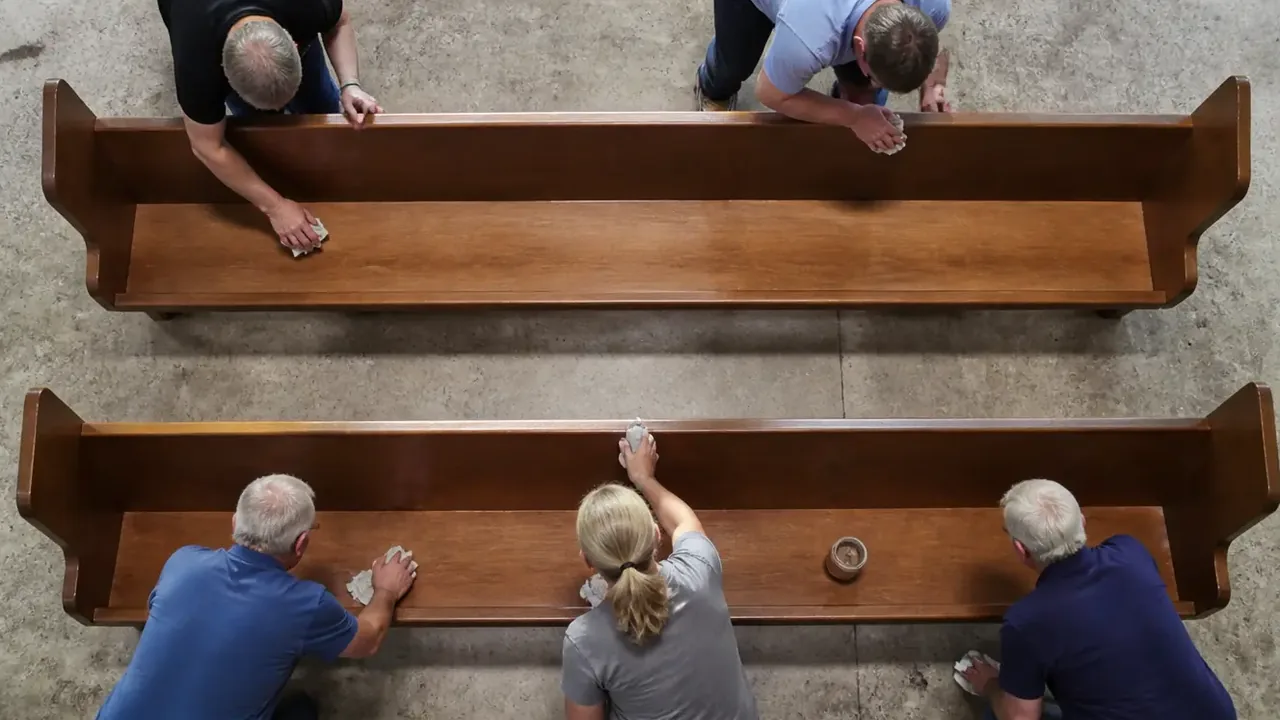
Once the church has decided to keep its pews, choose the cushions around the benches that remain. Length and fabric color are only part of that order. A loose pad, an upholstered board and permanently attached upholstery leave the church with different cleaning, handling and future removal tasks.
Compare a sample cushion on a representative pew, using the measurements and any pattern the supplier requests. Include any pew with a curved seat or shaped entry end. A cushion cut for a straight bench should not become the default for every row because the lengths happen to match.
Choose how the cushion belongs to the pew
Waggoners describes three cushion approaches: a reversible loose pad, upholstery permanently attached on site, and a modular cushion upholstered at the factory on a plywood base. The maker describes its modular option as giving an upholstered appearance without permanently changing the pew. These are that manufacturer's approaches; ask the offered supplier to identify its own construction and fixing method.
A loose pad can be lifted away, but the church still needs to know how it is held in its intended position. A board-based pad has an underside and an attachment or positioning arrangement that need review. Permanent upholstery requires the church to approve work on the retained wood, including what removal would leave behind.
Ask the person responsible for the pews to decide what changes are permitted. That may mean keeping the finish untouched, allowing a specified fixing, or requiring a conservation review before work begins. Have the cushion supplier explain the exact proposed method and any preparation of the bench. Do not leave a description such as “secured to pew” to be interpreted after delivery.
Match the bench shape before repeating a length
Measure the usable seat between the pew ends and show any change in depth along it. Record the front edge, the junction with the back and any fixed dividers. Ask the supplier which measurements it needs and who is responsible for producing and accepting the pattern.
Waggoners' cushion basics distinguish rectangular, circular-curved and mitered shapes. They also describe taking a pattern for an older pew with a rounded entry corner. That difference matters: an overall length does not describe the line the cushion must follow.
Group the pews by actual shape and usable dimensions. Keep a shortened front pew, a curved rear row or a different entry corner in its own group until the supplier confirms it can share a pattern. Give each group a simple identifier so the eventual cushions can be assigned to the right benches.
On the sample, review the edge at the entry end and the fit against the back. Ask whether the proposed shape leaves any part hanging beyond the intended support, blocks a retained fitting or makes the cushion difficult to lift as instructed. Resolve that fit with the maker before ordering repeated lengths.
Try the complete cushion on the retained seat
Use the proposed cover, core, backing and retention method together. Invite the people who will use the pews to sit in their usual manner and describe what changes. Added thickness changes the sitting position relative to the pew back and floor; a loose material swatch cannot show that relationship.
Keep the observations practical. A person may find the front edge troublesome, the back relationship different or the pad moving during ordinary use. Ask the supplier to address the observed issue with the permitted construction. Use its instructions and limits, and include the people responsible for access or individual seating needs in that decision.
Waggoners offers an optional separate non-skid pad beneath its reversible cushions. That is a particular construction option, not evidence that every loose cushion will stay in position on every finish. Obtain the offered arrangement's compatibility with the bench finish and its instructions for lifting, repositioning and care. Approve the arrangement that was actually tried, rather than adding an unspecified grip layer later.
Agree who lifts it and how it is cleaned
Bring the cleaning team into the choice while the sample is available. Ask the supplier for care instructions for the exact cover, core, underside, retention material and retained wood finish. An instruction suitable for the fabric may not be suitable for the backing or the pew beneath it.
If the cushion is lifted for cleaning, have the team follow the intended method and identify where it goes temporarily. A full-length loose pad needs somewhere to rest without being folded or dragged contrary to its instructions. A fitted board or permanent upholstery needs its own way to reach seams and the surrounding wood.
Request a clear answer about cover removal, washing, drying and reassembly. A loose cushion is not automatically a washable cushion, and a removable cover does not establish that it can go through the church's laundry. Keep the approved care with the product details so a future volunteer does not have to infer the method from the fabric's appearance.
Keep the cushion order tied to the pew groups
The order should identify the accepted pattern for each bench group, quantity, complete cushion construction, fixing or retention method, cover and agreed care. Name the party doing any work on the wood and include the church's approval conditions. Ask the supplier to identify replacement arrangements for a single damaged pad, including whether it can reproduce the accepted group pattern.
Use the pews and chairs discussion if the seating-type decision is still open. Once the pews are retained, take the fitted-cushion requirements to a supplier that can confirm this work. If cushions form part of a broader church furniture project, the furniture inquiry can describe that need, with the supplier confirming whether it can include the cushion work. General chair availability does not establish a pew-upholstery service.
Accept the cushion on the actual bench with the people who will sit, clean and care for it. Then repeat the approved construction only across the pews it was designed to fit.