MF / 01.01
Committees & Decisions
Running a Reseating Committee From First Motion to Final Pew
A season-by-season guide to chartering a sanctuary reseating committee, listening well, testing options, and leading a congregation to a decision in peace.
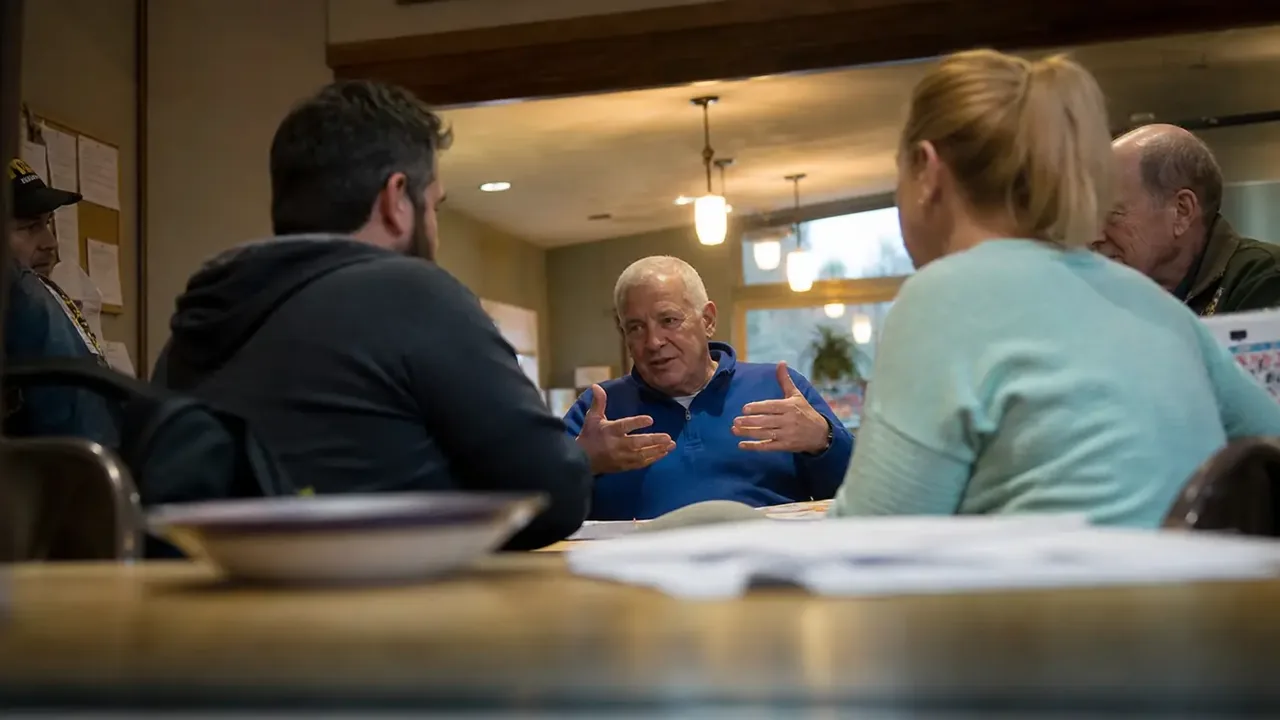
There are committees that handle money, committees that handle staffing, and committees that handle the roof. And then there is the reseating committee: the group asked to decide what happens to the seats where a congregation has worshipped, wept, married, and mourned for generations. If your board has just formed one, or is about to, we want to say this plainly: you are not managing a furniture decision. You are shepherding a memory decision that happens to involve furniture.
That is why reseating projects go sideways more often than roof projects. Nobody's grandmother donated the shingles. But that third pew on the left (the one with the small brass plaque, the one where a family has sat since before the current pastor was born), that pew is somebody's inheritance. When a committee treats reseating as a logistics exercise, the congregation hears something else entirely: your memories are in the way of our plans. When a committee treats it as a pastoral process with a practical outcome, the same congregation can arrive at the same decision with gratitude instead of grief.
This guide walks the whole arc, start to finish, framed in seasons rather than weeks, because in our experience, church decisions move at the speed of consensus, and consensus does not read a Gantt chart. Depending on your polity, some steps below will belong to your session, vestry, council, or board, whatever your tradition calls it, and some will belong to the congregation as a whole. Adapt freely.
Why Reseating Is Different
Before your committee holds its first meeting, it helps to name out loud why this particular project carries weight that other building projects do not.
Pews are one of the few objects in a church that people physically inhabit, week after week, in the same spot, often for decades. Habits of place become habits of heart. Many traditions have members who could walk to "their" seat blindfolded. Add memorial plaques, dedication gifts, and the pew a family paid for during a long-ago capital campaign, and you have furniture that functions as a memorial garden.
There is also the quieter grief of change itself. A reseating conversation often lands in a congregation that is already processing other transitions: a smaller attendance than the room was built for, a new pastor, a shifting neighborhood. The seats become the place where all of that gets discussed, because the seats are concrete and the rest is not. Wise committees expect this and refuse to be offended by it.
Name these dynamics in your very first committee meeting, and again publicly when the project is announced. A congregation that hears its leaders say "we know these pews hold memories, and we intend to honor that" will extend far more trust than one that hears only floor plans.
Season One: Chartering the Committee
A reseating committee lives or dies on its charter and its membership. Get both right before anyone measures anything.
The Mandate
Ask your board to pass a motion that gives the committee a written mandate. Vague charges ("look into the seating situation") produce vague, contested outcomes. A good mandate answers four questions:
- What is the question? For example: "Recommend whether the sanctuary seating should be replaced, reconfigured, restored, or left as is, and if changed, how."
- Who decides? Does the committee recommend to the board, or directly to a congregational meeting? Depending on your polity, a change to the worship space may require a congregational vote, board approval, or approval from a wider denominational body. Confirm this at the start, not the end.
- What is out of scope? If the budget, the organ, or the chancel layout is not on the table, say so in writing.
- When do you report back? Set a reporting rhythm: a brief update at each board meeting and at least one congregational touchpoint per season.
The Membership Mix
Resist the urge to fill the committee with whoever said yes first. The mix matters more than the size. A strong reseating committee usually includes:
- A trustee or property/finance voice who can speak to budget and building realities.
- A worship leader (clergy, musician, or lay leader) who thinks about how the room serves the liturgy.
- A long-timer: yes, the member who remembers 1974. Not as a token, but because that person carries the room's history and, if won over honestly, becomes your most credible ambassador.
- A newer member who can say what the room communicates to someone without forty years of attachment to it.
- Someone who lives with a mobility challenge, or who cares for someone who does. Pew spacing, transfer seating, and level routes look very different from a walker or a wheelchair, and a committee without that perspective will miss things a survey never surfaces. Our companion piece on accessibility in older sanctuaries goes deeper on what to look for.
Five to seven people is usually plenty. Larger groups struggle to schedule; smaller ones look like a faction.
Season Two: Listening Before Options
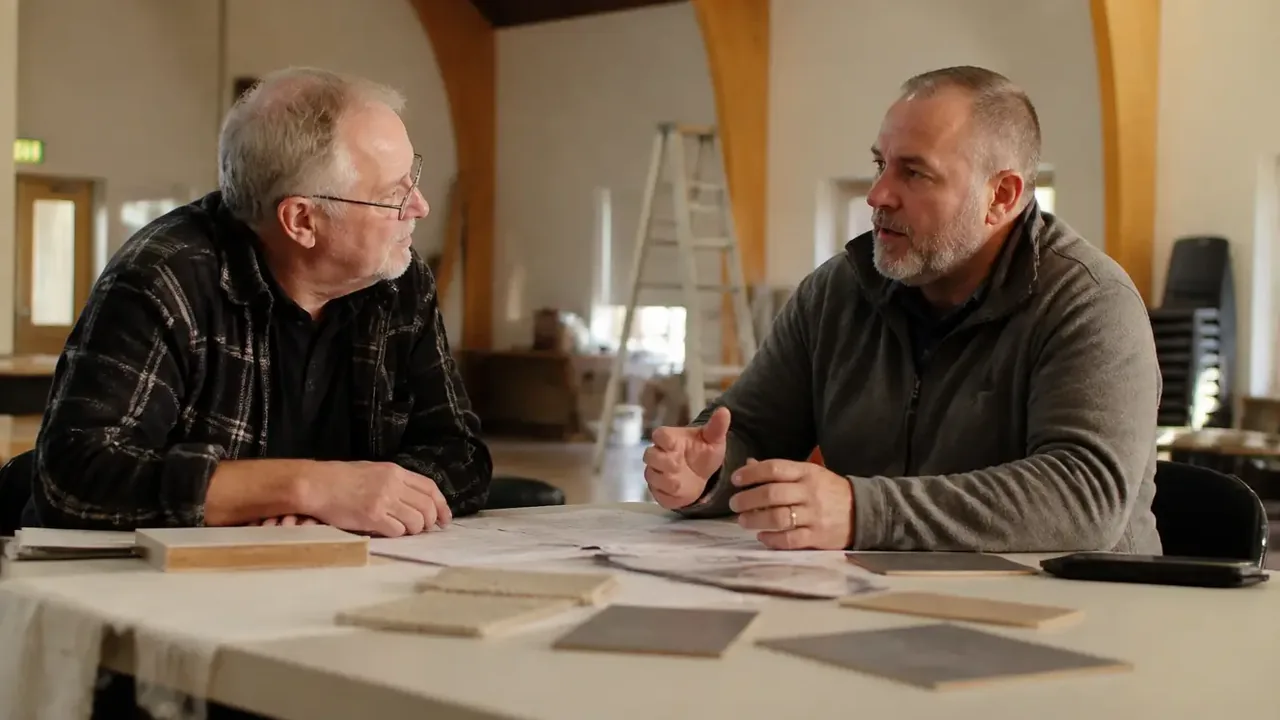
Here is the single most common mistake we hear about: a committee that arrives at its first congregational forum holding a floor plan. The moment options appear, listening ends and lobbying begins. Reverse the order.
Spend a full season (genuinely, months) gathering the congregation's relationship with the room before proposing anything. Practical formats:
- Small listening sessions after worship or midweek, eight to twelve people at a time, with a committee member taking notes and asking open questions: What do you love about this room? What frustrates you? What happens here besides Sunday worship? What would you grieve losing?
- A written or online response form for those who will never speak in a group but will absolutely write two heartfelt pages.
- Coffee-hour presence. Some of the most important intelligence a reseating committee gathers arrives over a styrofoam cup, unprompted. Committee members should circulate, listen, and log what they hear.
- Direct conversations with memorial families. If pews carry plaques or known dedication histories, contact those families early and privately. Nothing poisons a project faster than a memorial family learning about it from the bulletin.
Publish a short summary of what you heard (themes, not names) before moving to options. This one step tells the congregation their voices shaped the process, and it will be quoted back gratefully for years.
Season Three: Building the Options Memo

Now, and only now, does the committee do its homework on the room itself. Two workstreams run in parallel.
First, the practical facts. Measure actual usable rows, aisle layout, sight lines, accessibility needs, and observed crowding across the year. Our guide to measuring real sanctuary capacity separates the official occupant-load limit from a usable seating count and observed behavior. Loop in your fire marshal or local authority having jurisdiction early; egress, aisle, and seating requirements vary, and their determination, not the committee's arithmetic, controls.
Second, the stewardship framing. The pews-versus-chairs question is not a shopping decision; it is a discernment about what the room is for on Tuesday as well as Sunday, what permanence means in your tradition, and what a faithful cost horizon looks like. We have written a full companion piece on pews versus chairs as a stewardship question, and we would encourage every committee member to read it before drafting options.
The output of this season is an options memo: typically three or four scenarios, each described the same way: what changes, what it costs in rough order of magnitude, what it makes possible, and what it gives up. Include a "restore and keep" option even if the committee doubts it will prevail. Its presence proves the process was honest, and sometimes it wins on the merits.
Season Four: Trial Arrangements
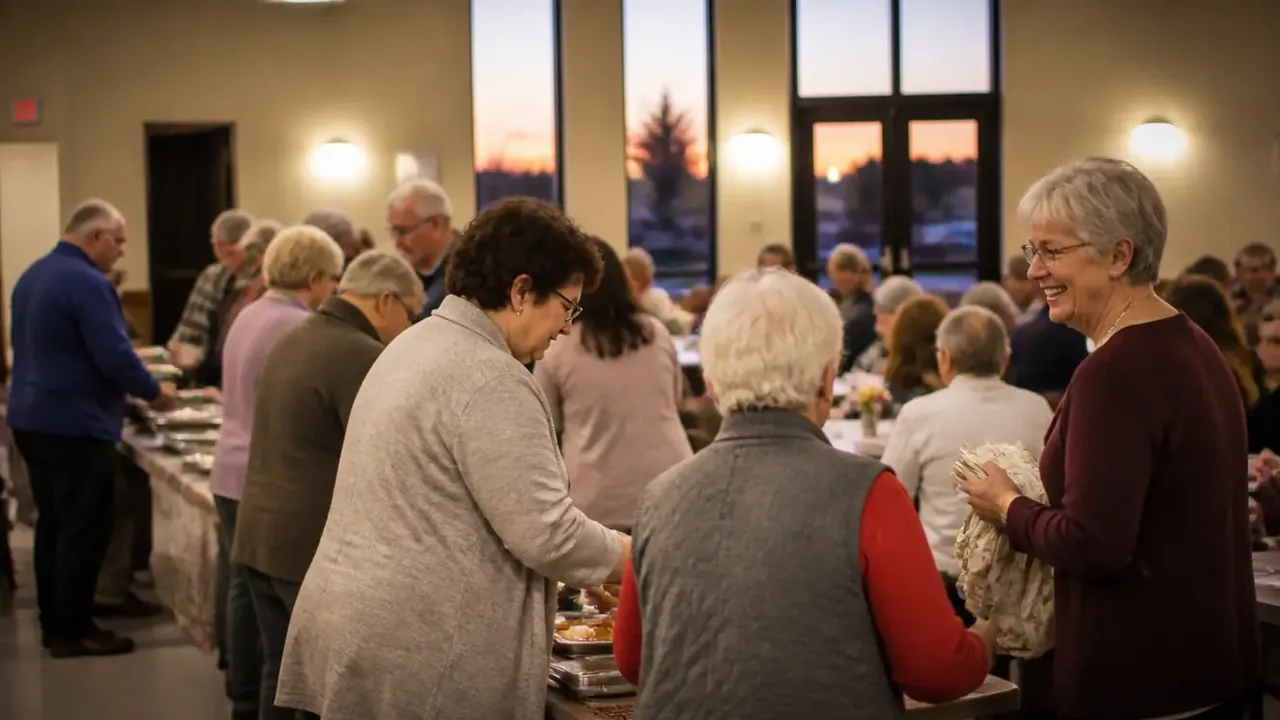
Wherever physically possible, let the congregation sit in the leading options before anyone votes. If a reconfiguration is on the table, rope off sections and rearrange what can be moved for a trial month. If flexible seating is under consideration, borrow or rent a modest number of chairs and set up one section: enough to worship in, not a showroom.
Trials do three things no memo can. They convert abstractions into experience. They surface practical problems early, while they are cheap to fix. And they give the hesitant a face-saving path: it is much easier to say "I tried it and it was fine" than to reverse a position taken in a meeting.
Announce trial periods with a clear end date and a clear feedback channel. An open-ended trial reads as a decision already made, and it will be resented accordingly.
Season Five: The Vote and the Aftermath
However your tradition allocates the final decision, treat the congregational meeting as the culmination of the process, not the process itself. By the time a vote is called, there should be no new information in the room: only a decision to ratify a conversation everyone has already been part of.
A few dynamics to plan for:
- Confirm your quorum and notice requirements well in advance. Many traditions require written notice a set period before a congregational meeting on property matters. A procedurally shaky vote invites a rerun of the whole conflict.
- Let the committee present, and let critics speak. A motion that passes after honest debate holds; a motion rushed past objections leaks authority for years.
- Do not chase unanimity. Aim for a decision the minority can live with because the process was fair. After the vote, someone from the committee should personally thank the most vocal opponents for sharpening the work. That gesture, more than any margin, determines whether the congregation stays whole.
- Communicate the result the same week: pulpit, newsletter, and a plain-language summary of what happens next and when. Silence after a vote breeds rumor.
If the motion carries a spending component, the committee's work hands off to funding. A reseating decision without a funding plan is a sermon without a benediction; our guide to building a renovation fundraising plan picks up exactly where this article leaves off.
What to Do With Retired Pews
If the outcome retires some or all of the pews, plan their departure with the same care as their replacement. This is the moment memorial families are watching.
- Offer memorial keepsakes first. A section of a dedicated pew, the plaque itself remounted on a small board, or a cross or shelf made from the wood by a woodworker in the congregation. These transform loss into legacy.
- Repurpose within the building. Pew benches serve beautifully in narthexes, fellowship halls, hallways, and gardens. A room that keeps a few of its old pews in new roles tells the story of continuity.
- Offer the remainder to members, then to the community. Announce a claiming process with dates. Whatever remains can often go to other congregations, camps, or restoration workshops.
- Document everything. Photograph the sanctuary before the change, record where dedicated pews went, and file it with the church's records. Fifty years from now, someone will ask.
A Closing Word to the Committee Chair
Somewhere in the middle of this process, probably on a Tuesday, you will wonder why you agreed to chair it. Hold onto this: congregations do not remember seating projects for the seats. They remember whether they were listened to, whether the saints who gave those pews were honored, and whether the church felt more like itself on the other side. Move at the speed of consensus, keep the memorial families close, let the skeptics test-sit the future, and you will hand the next generation more than a room. You will hand them proof that their church can change something it loves without losing itself.