MF / 04.01
Accessibility & Welcome
Fifteen Welcome Areas That Say Come In
A walking tour of fifteen entry and narthex spaces (porticos, vestibules, coat walls, coffee corners, check-in nooks) and what each one quietly tells a first-time visitor.
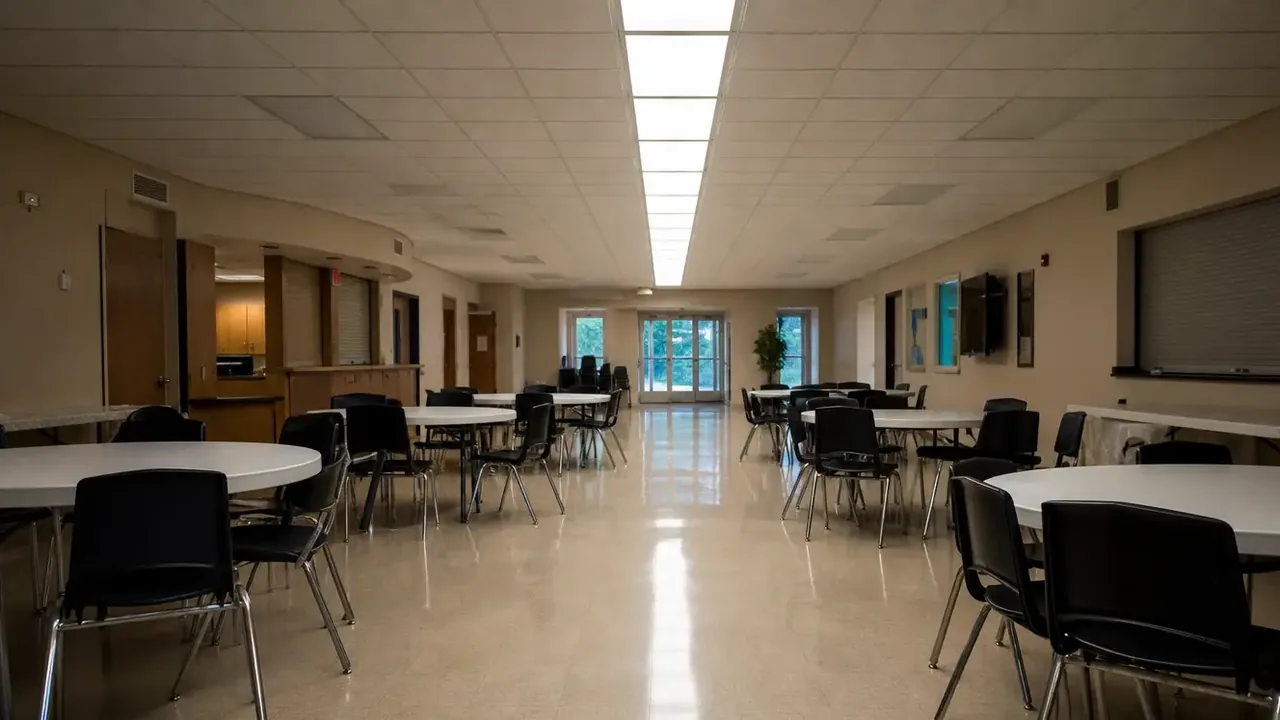
Nobody joins a congregation because of an entryway. But plenty of people fail to come back because of one, because the door was confusing, the lobby was a bottleneck, there was nowhere to put a dripping coat, or the whole first minute felt like walking into someone else's family reunion. The space between the parking lot and the sanctuary is where a first-time visitor decides, mostly unconsciously, whether this building expected them.
So this piece is a walking tour. Fifteen welcome areas (some outside the doors, most inside them) each doing one specific job in a visitor's first three minutes. None of them requires a building campaign. Most are questions of arrangement, light, and attention: the things a property committee can change in a season.
One honest note before we start: the photographs in this article are illustrative concept images, not photographs of real congregations' buildings. They exist to show the idea of each space; your version will and should look like your building.
1. The Covered Entry
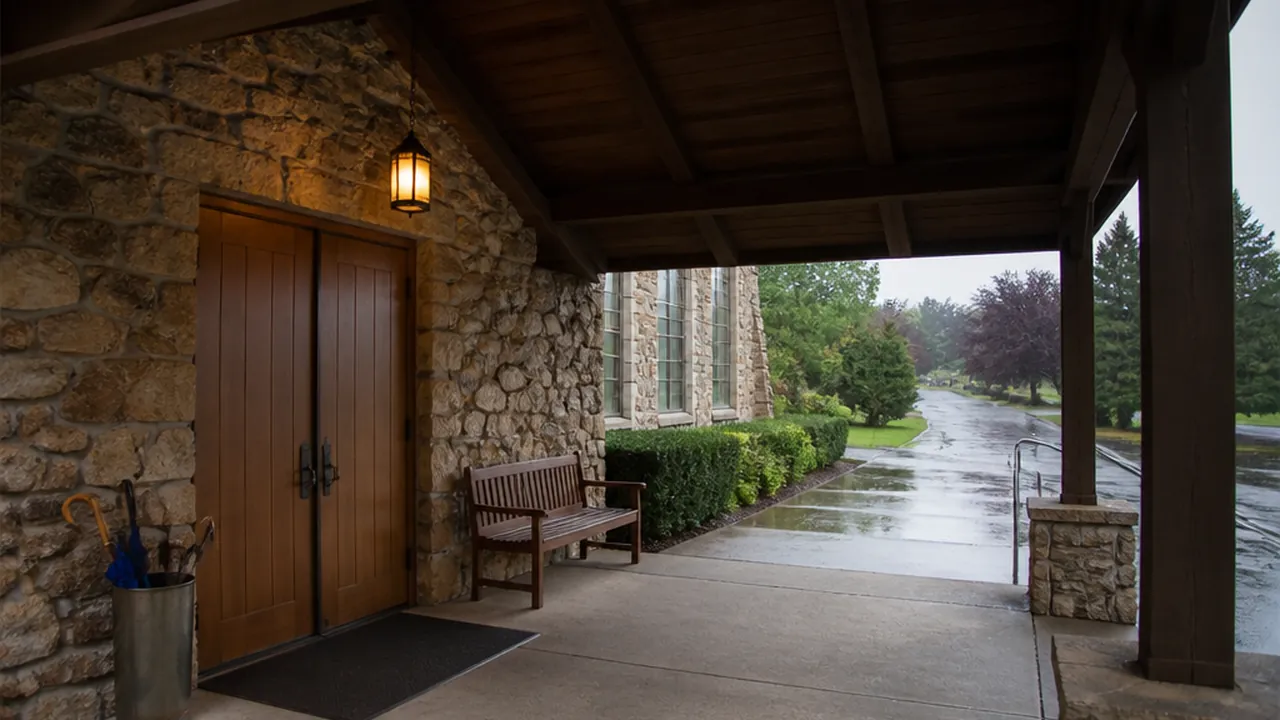
A visitor's first impression is formed while they are still outdoors, and in most of the US and Canada, outdoors has weather. A covered entry (a portico, a deep overhang, even a modest canopy) says something specific: you can pause here. Fumble for the door, close the umbrella, wait for the rest of your family, without being rained on while you do it.
For the visitor, the shelter reads as consideration. For your committee, the questions are practical: does water sheet off the roofline onto the exact spot where people stand? Is the paving under the canopy the first surface cleared in winter? Is there a bench for the person who arrives early for the ride home? If your entrance has no cover at all, this is one of the few items on this list that is genuinely a construction project, which is why it belongs on the long-range list rather than the never list.
2. The Approach
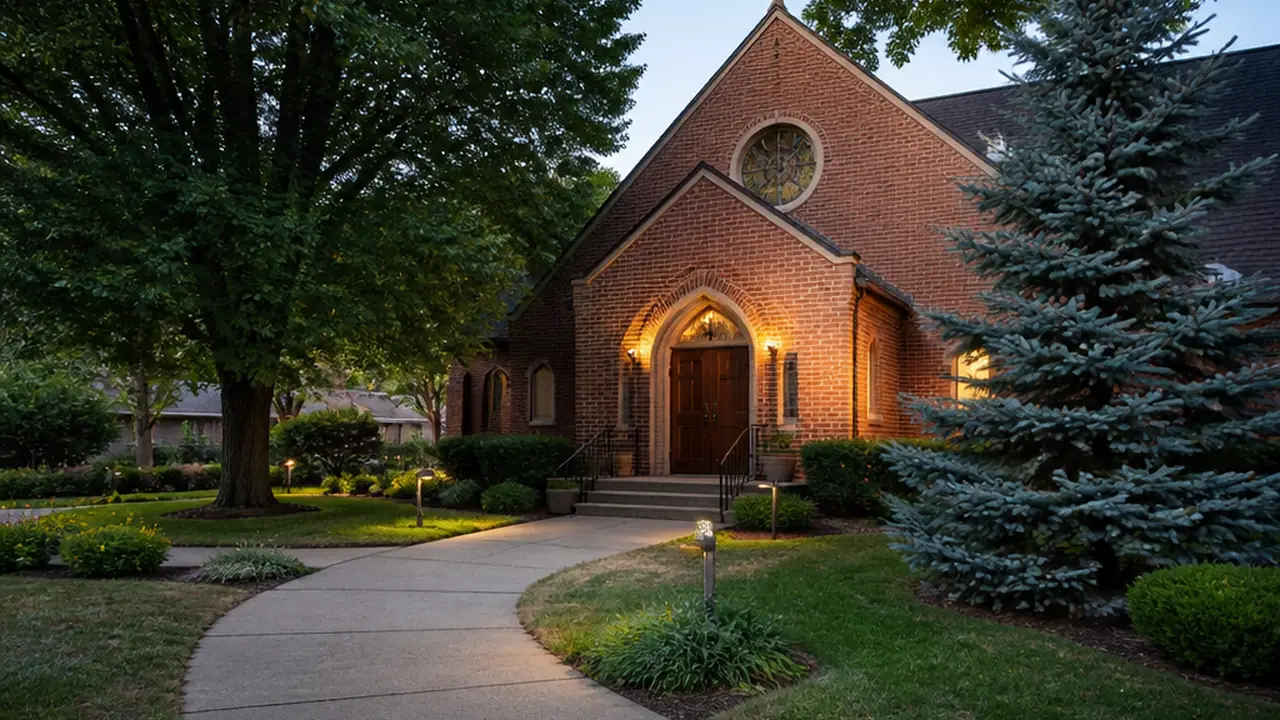
Before the door, the walk. A visitor reads the approach path the way you read a host's front porch: is it swept, is it lit, does it lead somewhere obvious? A walkway that arrives at the correct door without a decision point (no forks, no unmarked side routes, no guessing) does more wayfinding work than any sign.
The committee version of this: walk it after dark, walk it in January, and walk it beside someone using a cane. We have a full exercise for this in the arrival journey, but the short form is that the approach should be the flattest, best-lit, first-shoveled path on the property.
3. A Door Worth Pausing At
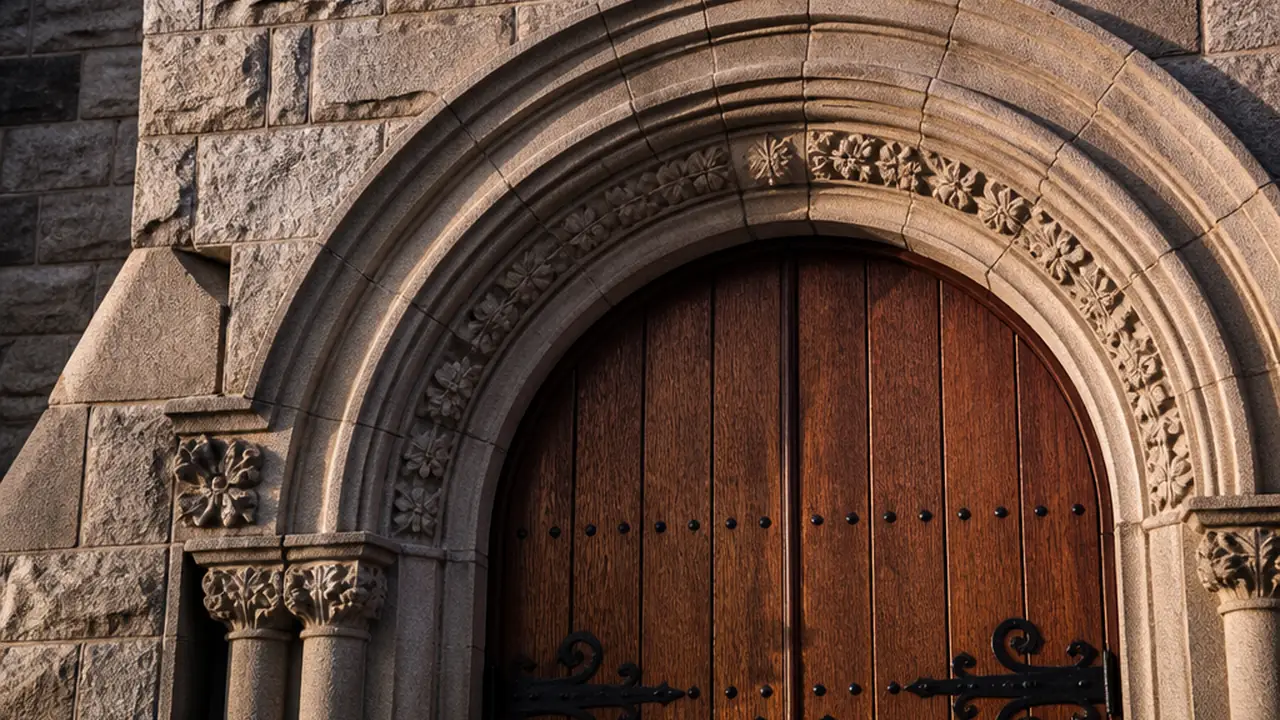
Every building has one door that is the door, and a visitor should be able to identify it from the parking lot without help. Architecture usually did this work generations ago: an arch, a gable, a pair of doors where every other entrance has one. If your main entrance genuinely reads as the main entrance, protect that clarity: don't let the congregation drift into using a side door on Sundays while visitors walk up to a locked front one.
And then there is the door itself: its weight, its handle, its threshold. A beautiful door that takes two hands to open is a mixed message. The fixes are usually hardware-scale, not carpentry-scale (a closer adjustment, a lever handle) and we walk through them in ramps, lifts, and entrances.
4. Lit and Legible After Dark
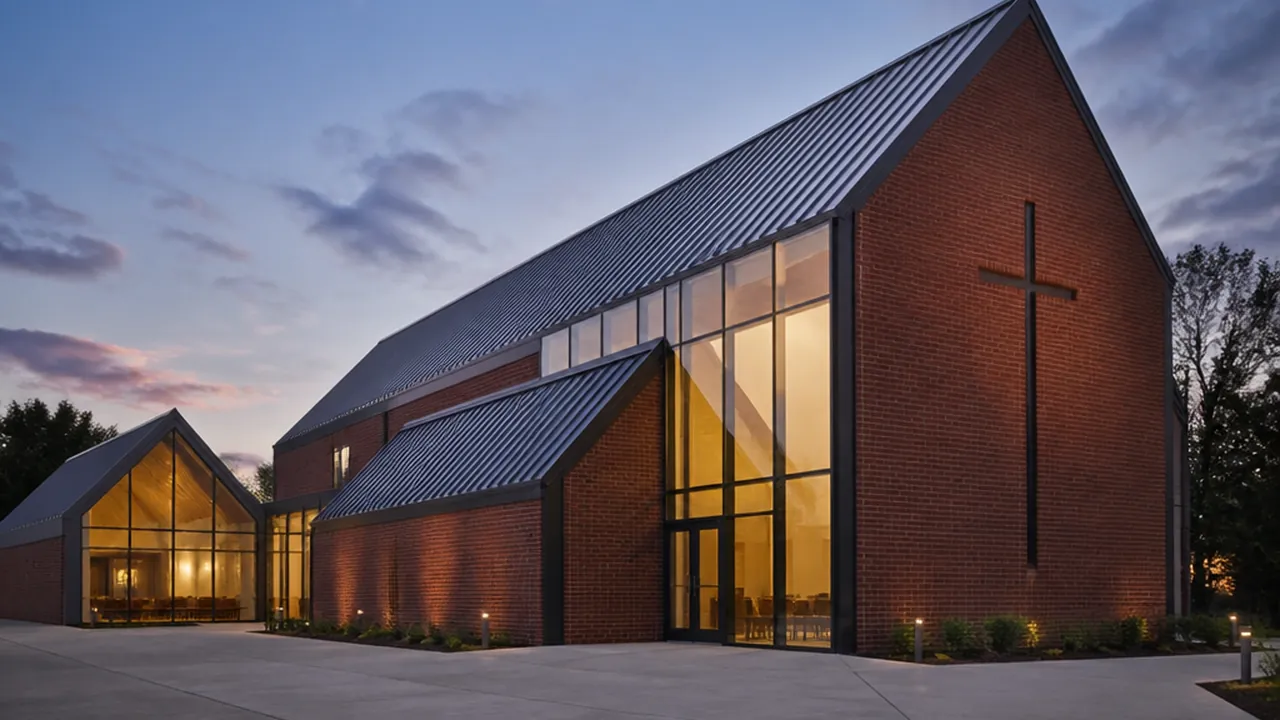
For a good part of the year, in most of this continent, evening gatherings happen in the dark. A building that glows (windows lit, entry lit, path lit) reads as occupied and expecting you. A dark facade with one bare bulb over a side door reads as storage.
The visitor experience here is almost animal: people walk toward warm light. The committee's checklist is short: light the door you want people to use more generously than any other, light the path continuously rather than in pools, and put the exterior lights on a timer or photocell so hospitality doesn't depend on whoever arrives first remembering a switch.
5. The Vestibule That Lets You Breathe
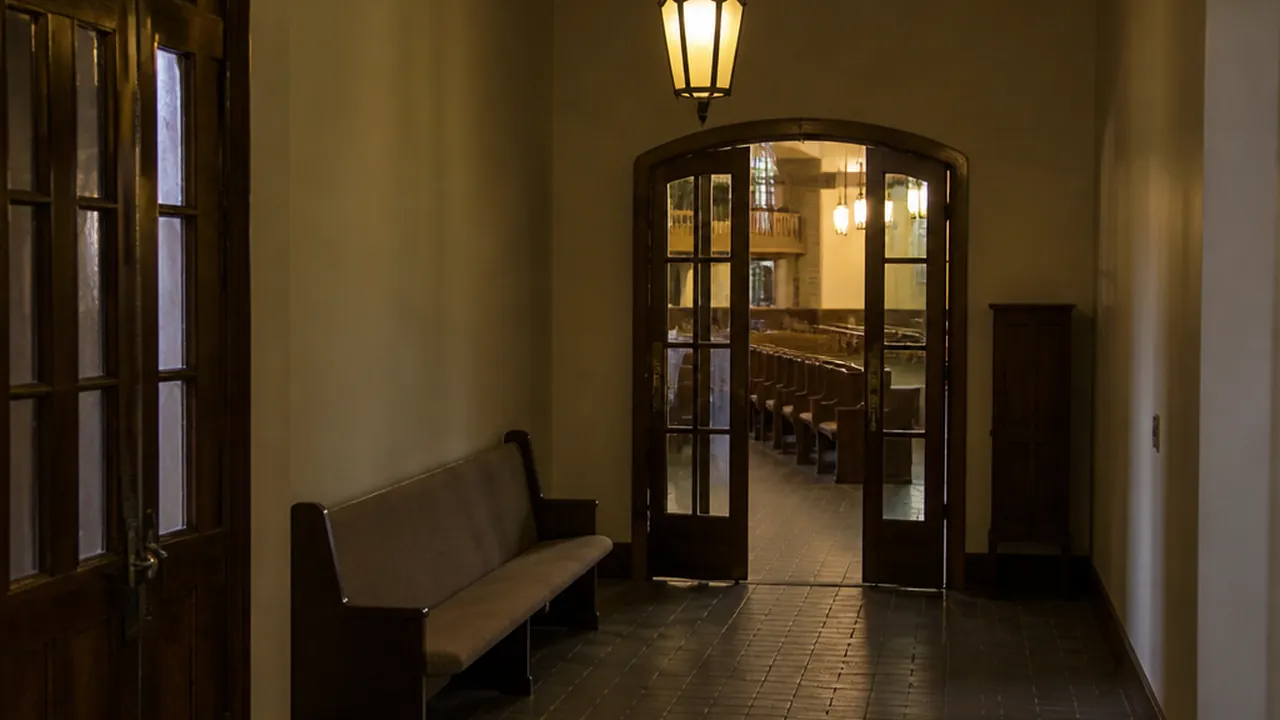
The little room between the outer and inner doors gets treated as dead space: a place for stray umbrellas and last year's flyers. It is actually one of the most humane rooms in the building. A vestibule is where a nervous visitor takes one breath before walking into a room full of strangers; where a parent regroups a scattered family; where a latecomer waits out the prayer they don't want to interrupt.
Let it do that job. Keep it clear enough to pause in without blocking the flow, warm enough that pausing is bearable in February, and calm enough (a bench, a lamp, not a gauntlet of notices) that it feels like a threshold rather than a chute.
6. Somewhere for Wet Boots
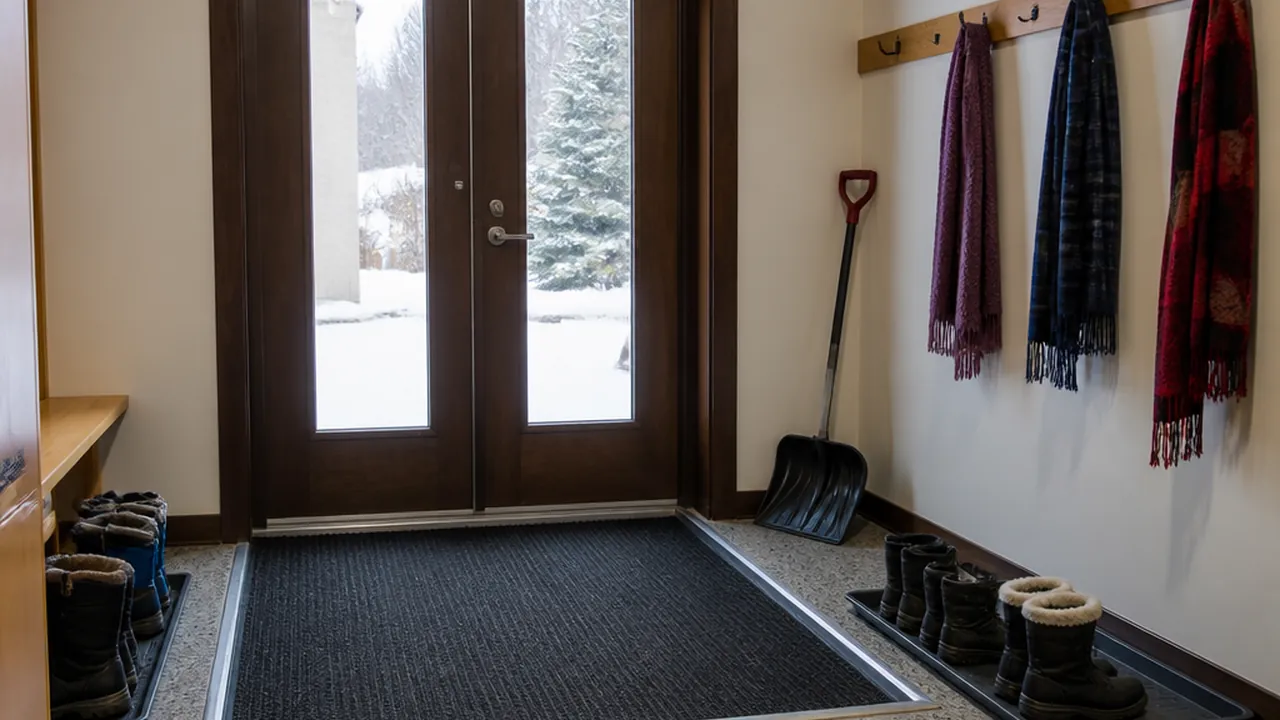
Northern congregations know this one in their bones: from November to April, everyone arrives carrying half the parking lot on their feet. A real boot zone (generous walk-off matting that lies flat, boot trays that are clearly meant to be used, somewhere to lean while you deal with a boot) protects your floors, your budget, and your visitors' dignity all at once. A rumpled rug by the door is none of these things; it is a trip hazard with good intentions.
The committee considerations are wonderfully unglamorous: mats sized to the actual traffic, recessed or edged so walkers and wheels cross them cleanly, and a stated plan for who wrings them out. This is maintenance-as-hospitality, and it is some of the cheapest hospitality you will ever buy.
7. The Coat Wall
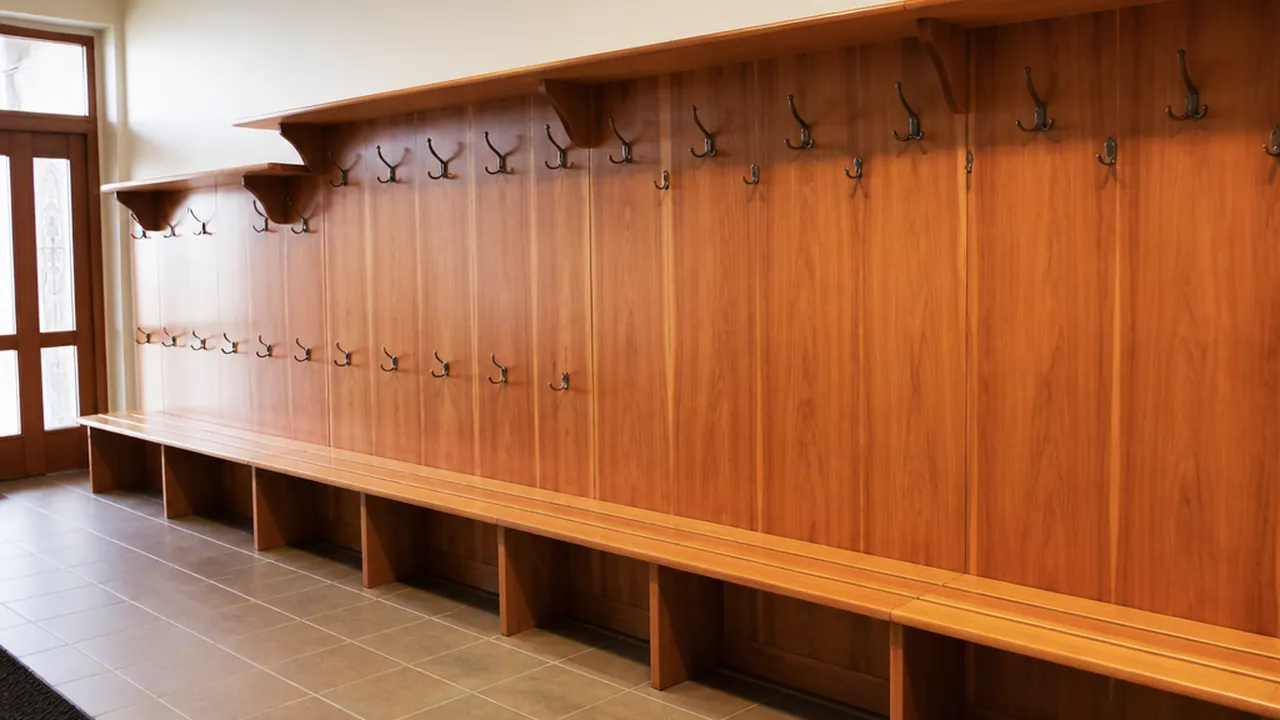
A visitor holding their coat all morning is a visitor who has already decided they might need to leave. Somewhere obvious to hang it (hooks in sight of the door, not a closet behind an unmarked door) is a small, physical way of saying stay awhile.
Details worth a committee's five minutes: hooks at more than one height, because children like hanging their own coats and some adults can't reach high ones; a bench underneath, because boots and coats happen together; and enough capacity for your biggest ordinary Sunday, because a coat wall that overflows every week teaches people to keep their coats, and their distance.
8. The Welcome Table
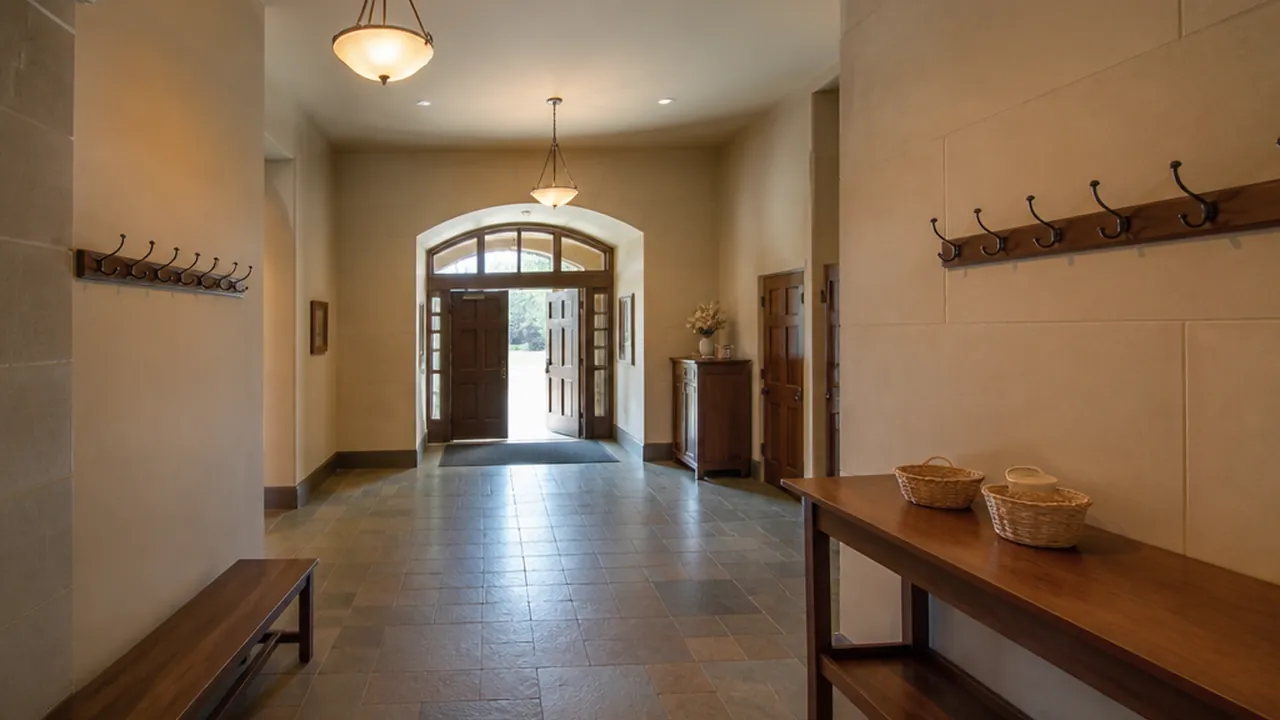
The welcome table is the one item on this list that most congregations already have. The question is whether it works. A working welcome table sits where an arriving stranger naturally passes, holds a small and current selection, not an archaeology of old bulletins, and, on Sunday mornings, has a person near it whose whole job is noticing new faces.
An untended welcome table is worse than none, because it makes a promise the room then breaks. If your hospitality roster is thin, it is better to station your one greeter at the door than behind a table. Furniture doesn't welcome anyone; it just gives the welcomer somewhere to stand.
9. The Sightline to the Sanctuary
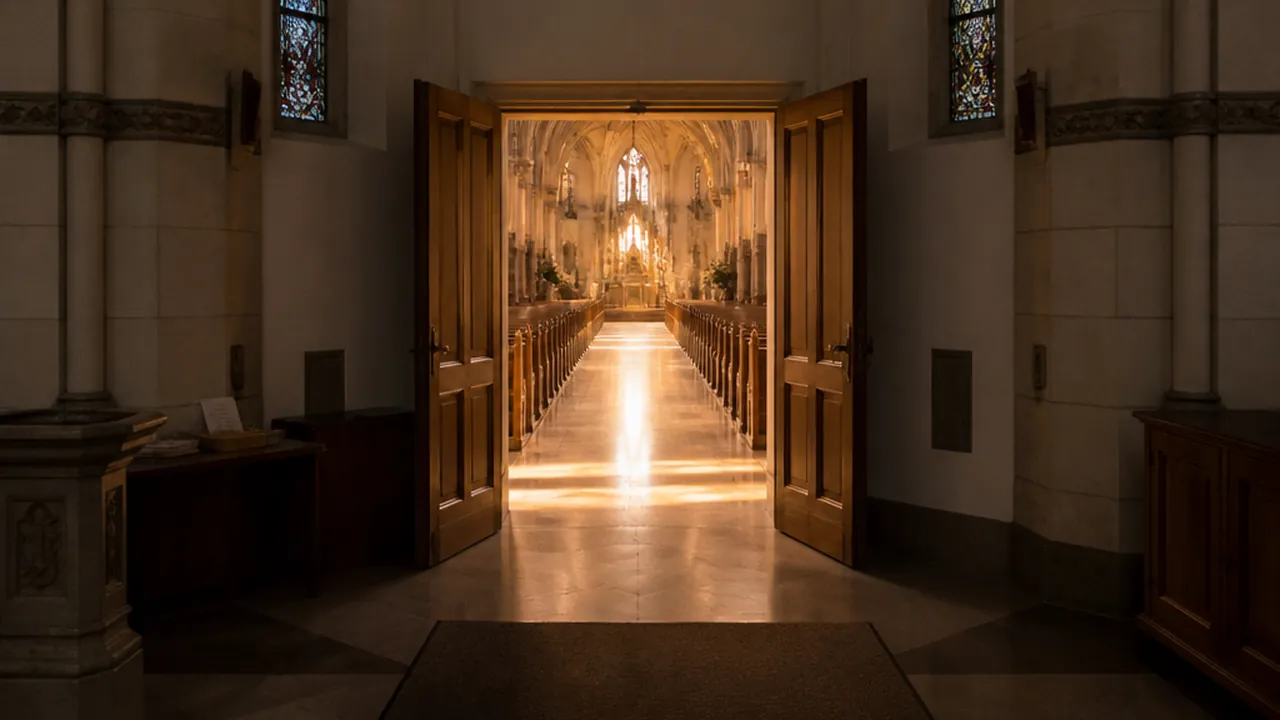
Stand where a first-time visitor stands when they step inside, and ask what they can see. The single most reassuring sight is the way in: open sanctuary doors, light beyond them, maybe the backs of pews or chairs. That one sightline answers the question every newcomer is silently asking (where am I supposed to go?) without making them ask it aloud.
Committees break this sightline by accident: a display board drifts in front of the doors, the doors stay closed until two minutes before the service, a table migrates. The fix is a habit, not a purchase: doors open early, the path to them kept visually clear, and anything that must sit in the middle of the room kept below shoulder height.
10. The Coffee Corner
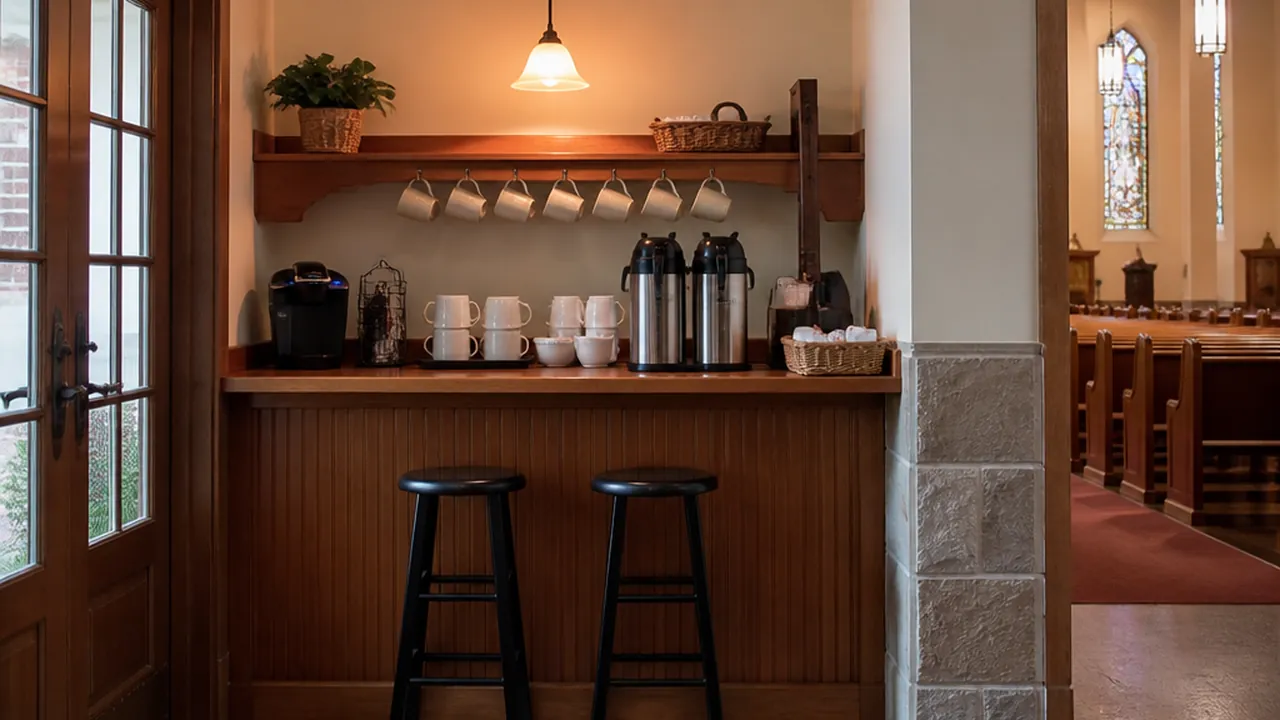
Coffee in the narthex is not about coffee. It is about giving a visitor a reason to linger and something to hold: a prop for the awkward minutes when they don't know anyone yet. A cup in hand turns standing alone into having coffee, which is a socially complete activity.
If your kitchen is down a hall, consider whether a small serving point can live near the door on Sunday mornings instead. The committee questions are about flow and floors: put the corner where a small crowd can form without plugging the main path, and mat or seal the floor under it, because coffee near an entrance means drips near an entrance. Spills are a hospitality cost, and a fair one.
11. The Kids' Check-In Nook
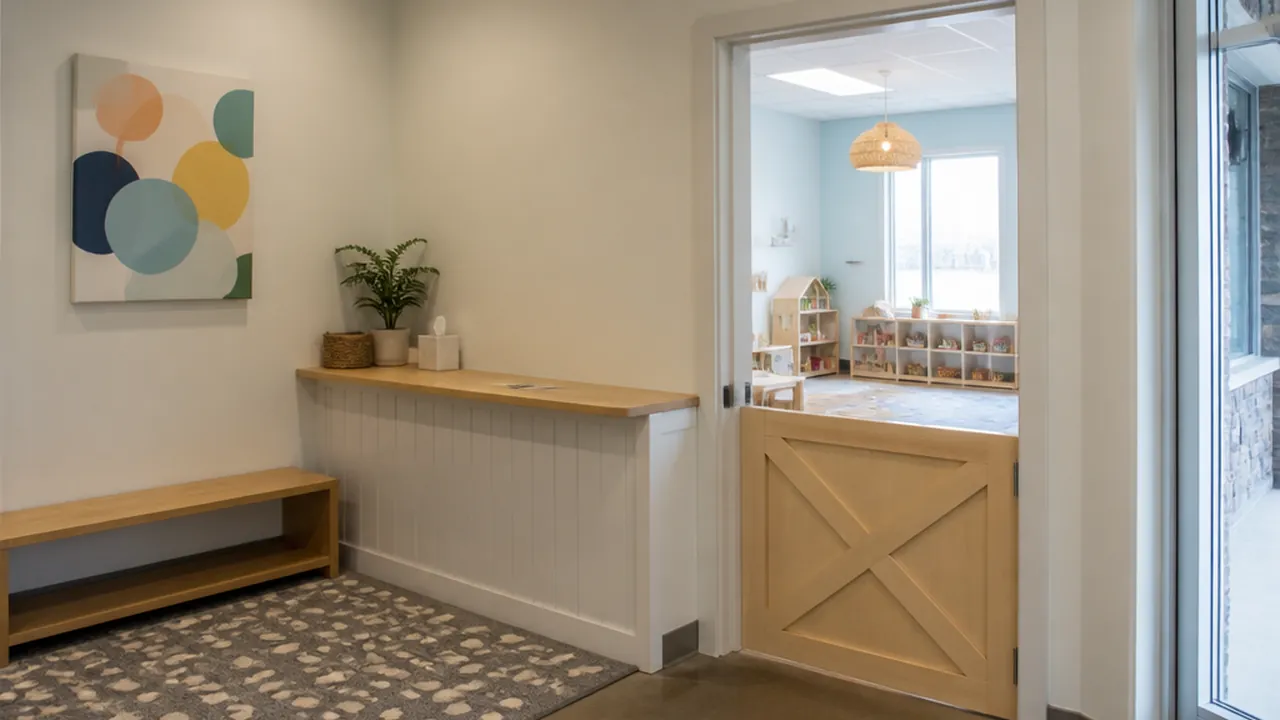
For a visiting family, the entire visit hinges on one transaction: handing a child to strangers. A dedicated check-in spot (low counter, a half-door into the children's space, somewhere to sit while small shoes come off) tells parents this handoff happens here every week, calmly, with a system.
It should be findable from the front door without asking, because a parent towing a reluctant four-year-old does not want to wander. And it should sit at the children's area, not across the building from it, so parents see where their child is going. The deeper questions (sightlines into rooms, pick-up procedures, safe-conduct policies) belong to your nursery and child-safety planning; the nook is the front porch of that system.
12. Stroller Parking
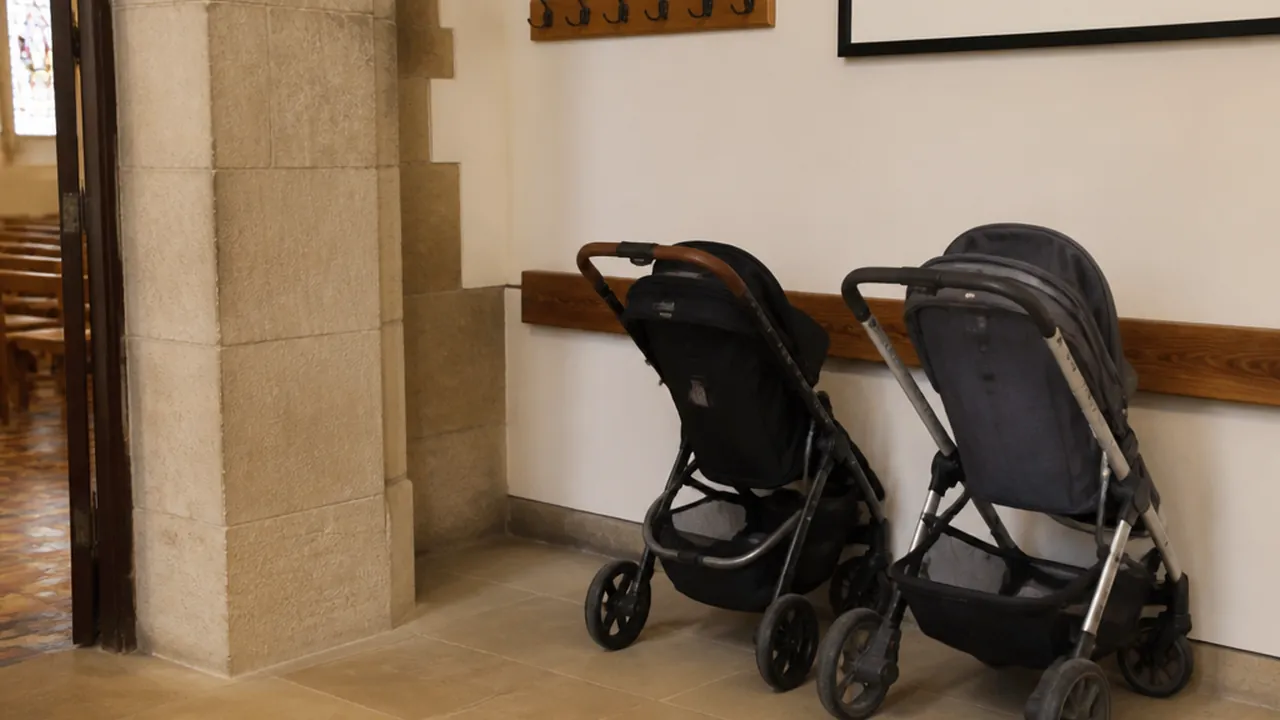
Where do the strollers go? Every congregation with young families answers this question every week: either on purpose, or by letting a stroller jam accumulate in whichever corridor is nearest the door. An alcove or marked zone near the entrance, out of the exit path, says young families are expected here in the plural, which is exactly what a visiting parent is wondering.
The committee consideration hiding inside this cheerful topic is egress: strollers migrate toward doors, and doors are exits. Your fire-code corridor widths are measured without the strollers. A designated spot is not fussiness; it is the difference between hospitality and a blocked exit, and your local authority having jurisdiction will see it exactly that way.
13. The Accessible Way In
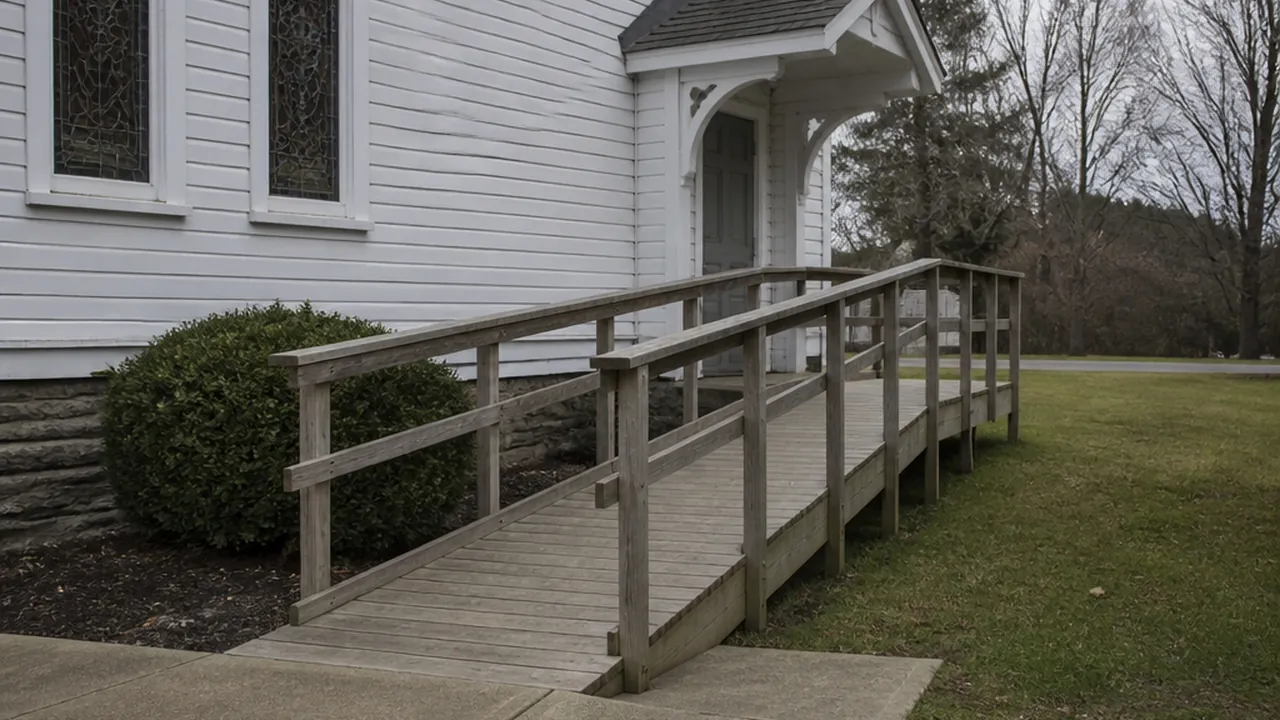
An entry sequence can pass every test above and still fail the person for whom entering is hardest. The accessible route deserves the same qualities as the main one (sheltered, lit, obvious, and dignified) because for the person using it, it is the main one. A ramp around the back, past the bins, tells that person precisely where they rank.
We've written at length about making older buildings reachable, so here is just the welcome-area test: could a wheelchair user arrive, enter, hang a coat, get coffee, and reach the sanctuary alongside everyone else: same doors, same rooms, same company? Every "almost" in that sentence is a committee agenda item. Technical requirements vary by jurisdiction on both sides of the border; the dignity requirement doesn't vary at all.
14. A Pocket to Sit and Talk
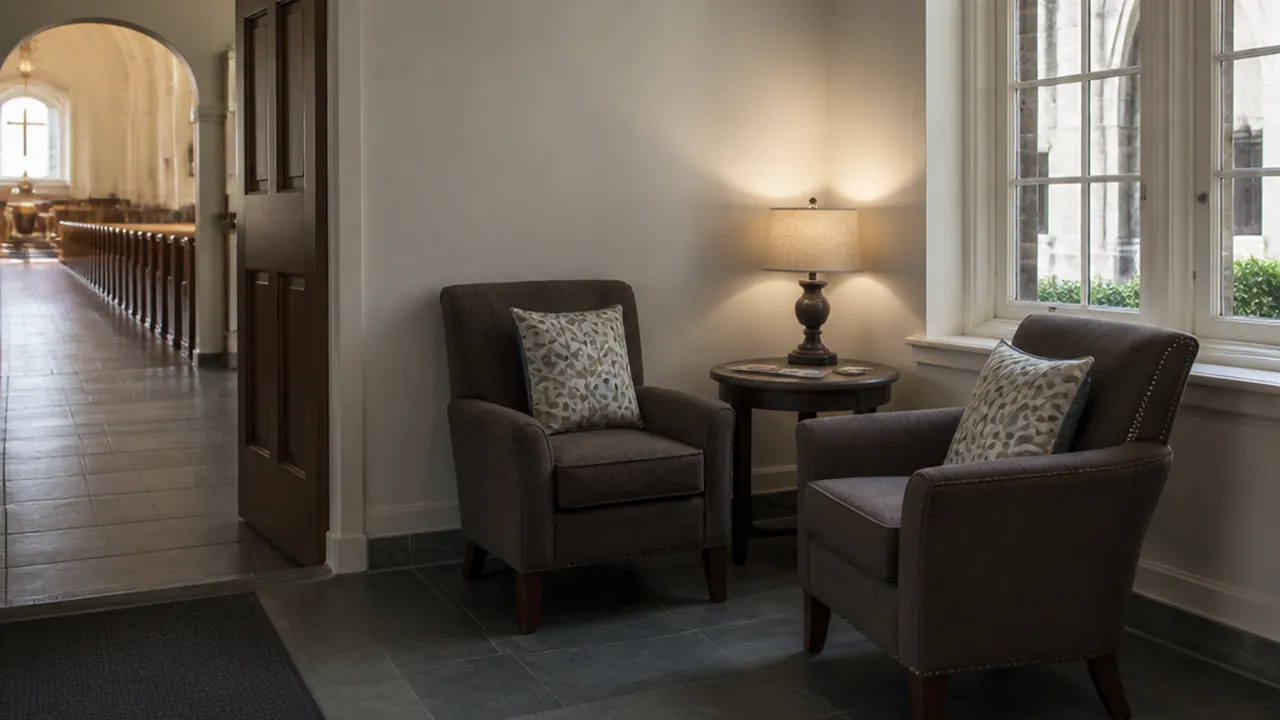
Somewhere in the entry sequence, two or three chairs should make a small room-within-the-room. This pocket serves people the rest of the space forgets: the elderly member waiting for a ride, the visitor who arrived twenty minutes early and needs somewhere legitimate to exist, the two friends whose after-service conversation turned out to matter.
It costs a corner and some pieces you likely already own. The placement rules: near the windows if you have them, outside the main traffic stream, and close enough to the action that sitting there feels sociable rather than exiled. If conversations regularly overflow this pocket, that's your cue to think about the fellowship hall, but the pocket is where those conversations start.
15. The Information Corner
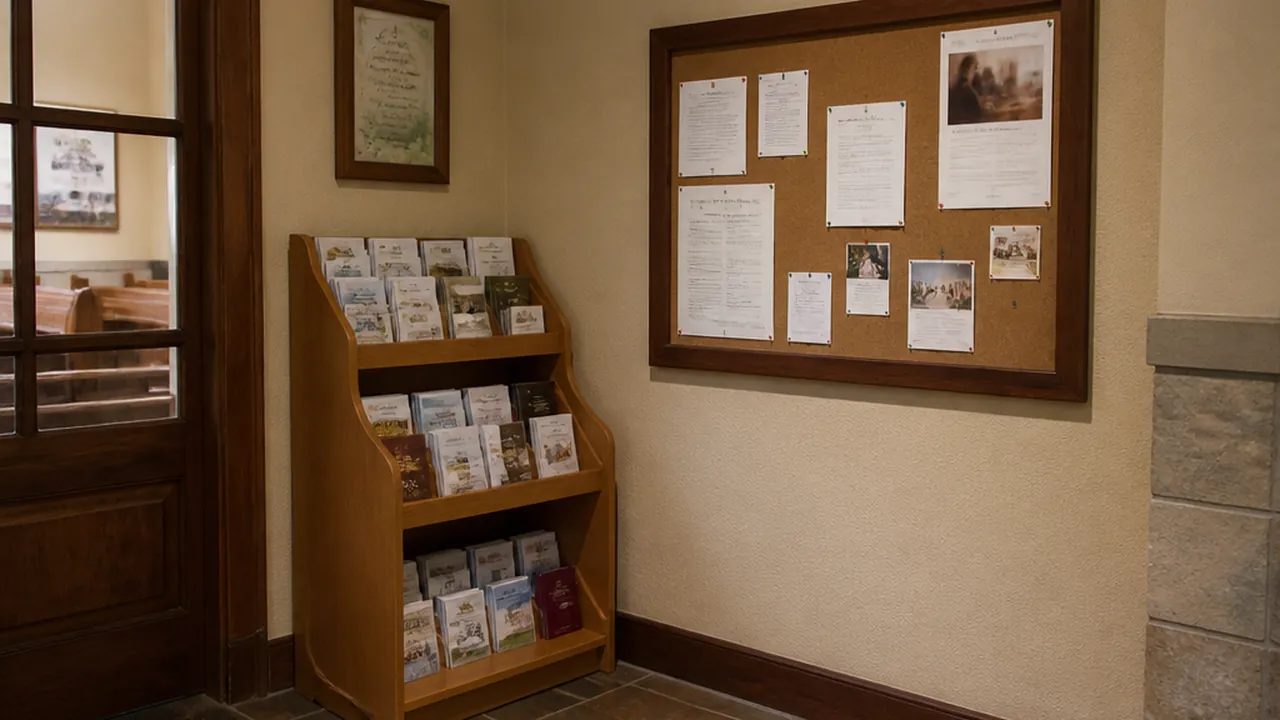
Last, the spot that answers the visitor's quiet question: what happens here the other six days? A single, tended information point (a shelf, a board, a rack) lets a newcomer discover the choir, the food bank, and the Tuesday study without having to confess ignorance to a stranger.
The operative word is tended. An information corner curated monthly says this congregation is alive; five scattered bulletin boards, each layered with three years of posters, say the opposite, loudly. Give one person ownership, give everything on the board a take-down date, and let the corner stay small. In a welcome area, curation is kindness.
Walking Your Own Fifteen
Not every building can hold all fifteen of these, and no building needs to. A small congregation with a tiny narthex might combine the welcome table, the information corner, and the coffee into one well-run six feet of counter, and out-welcome a building five times its size.
So here is the exercise for your next property committee meeting, and it costs nothing: walk in as a stranger. Park where a visitor parks, use the door a visitor would guess, and move through your own entry sequence asking one question at each stop: what does this spot tell someone the building wasn't expecting? Write down the fifteen answers. Sort them into habits (free, this month), arrangements (cheap, this season), and projects (budgeted, this year or beyond): the same sorting rhythm we recommend for every arrival-journey fix.
Then change the habits first. The remarkable thing about welcome areas is how much of the welcome turns out to be practice rather than construction: doors opened early, lights on timers, mats laid flat, one board curated, one greeter watching the walk. A congregation that does those things has already said come in. The building is just agreeing.