MF / 02.02
The Building Itself
How to Run a Facilities Audit With Volunteers
A complete volunteer walk-through framework for your church building: the route, a simple scoring habit, and turning findings into next year's budget.
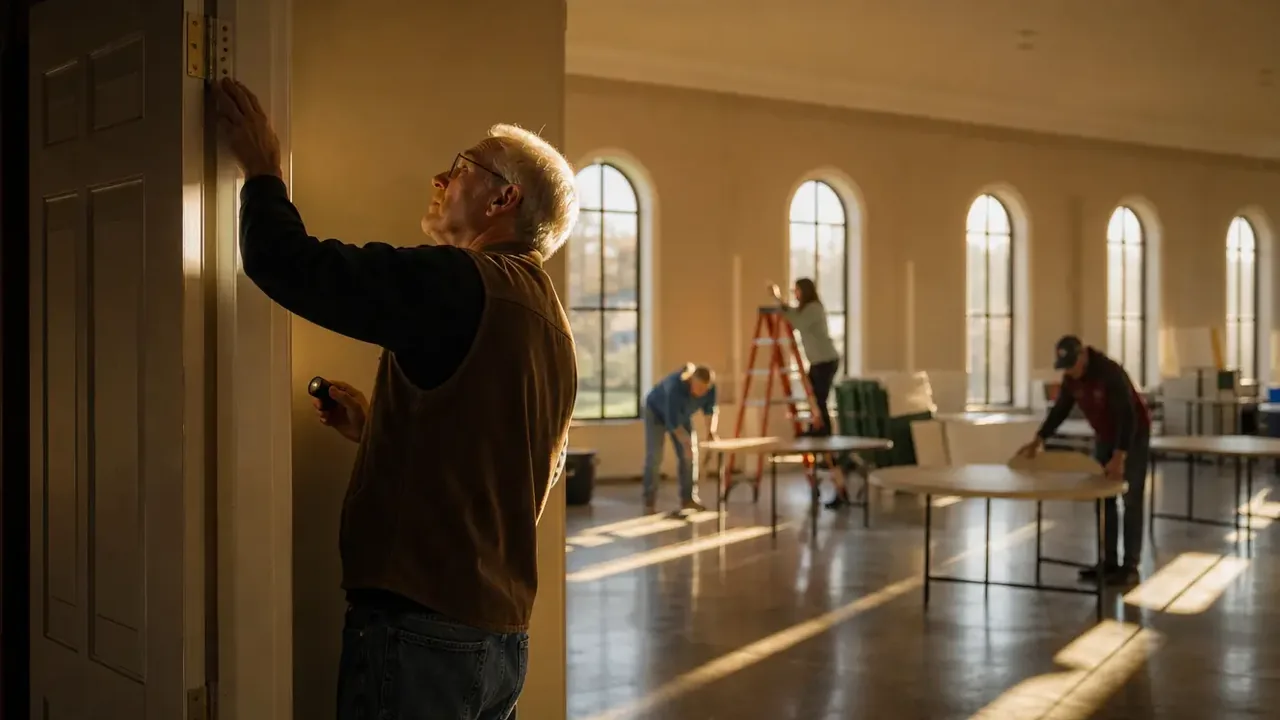
Somewhere in your congregation, right now, the building knows things the board does not. The furnace room knows how old the water heater really is. The window wells know where the water goes in a hard rain. The stairwell to the education wing knows which handrail wiggles. None of this is secret. It is simply unrecorded, scattered across the memories of a dozen people who each assume somebody else is keeping track.
A facilities audit is the annual act of writing it all down. Not an engineering report, not an insurance inspection, not a professional condition assessment: those have their place, and we will be clear about where volunteers must step aside for licensed professionals. An audit is humbler than that: a small team, a clipboard, a camera, and a Saturday morning spent looking honestly at every part of the building you own, so that decisions about it can be made from knowledge instead of anecdote.
The good news is that this is genuinely volunteer-sized work. It requires no special credentials, no equipment beyond a phone camera and a notepad, and no budget. What it requires is a method: a route, a scoring habit, and a way of presenting findings that informs the board without alarming the congregation. Here is the whole framework.
Assembling the Walk-Through Team
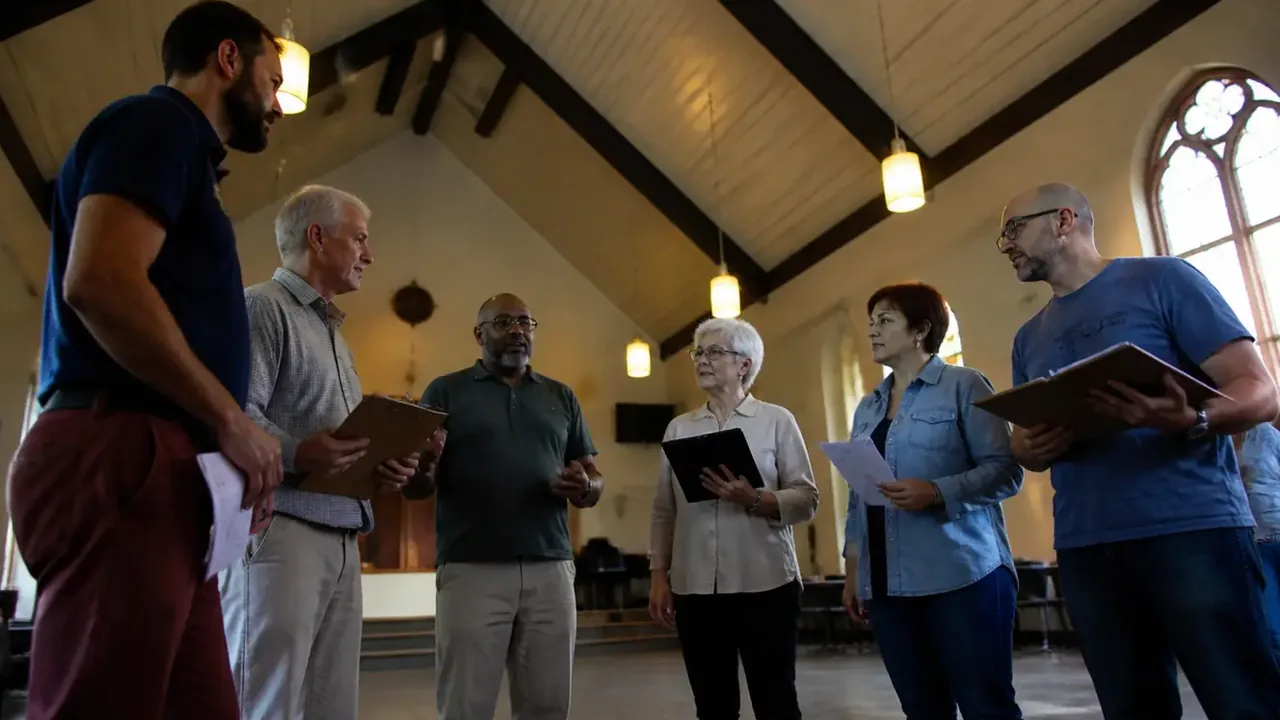
Three to five people is the sweet spot. Fewer, and the audit leans too heavily on one person's eye; more, and the walk-through becomes a social event that finishes half the route.
Aim for a deliberate mix of two kinds of vision. You want institutional memory: the longtime member who knows the boiler was replaced the year of the big anniversary, remembers which contractor did the parking lot, and can tell you what that mysterious valve is for. And you want fresh eyes: someone newer to the congregation, or even a trusted friend from outside it, who still actually sees the building. Longtime members walk past the water stain because it has been there for years; the newcomer asks about it in the first five minutes. Both perspectives are essential, and neither is sufficient alone.
One person carries the clipboard and writes. One person takes photographs. Everyone looks. Agree before you start that this is an observation exercise, not a repair session. The urge to fix the loose hinge on the spot is noble, but it derails the route. Note it, photograph it, keep moving.
The Clipboard Route

Walk the same route every year, in the same order, so that this year's notes line up with last year's. Outside first, top to bottom; then inside, following the building's own logic. Here is a route that adapts to most church buildings:
Exterior envelope
- Roofline, viewed from the ground on all sides: sagging, missing or slipped shingles, flashing that looks lifted (binoculars help; nobody goes up)
- Gutters and downspouts: attached, clear, discharging away from the foundation
- Foundation and grading: cracks, soil sloping toward the building, pooling spots
- Walls, siding, masonry, and paint: staining, spalling brick, peeling, rot at trim
- Windows and doors: glazing condition, seals, sills, whether everything opens and closes
- Steps, ramps, railings, sidewalks, and parking areas: trip hazards, heaving, loose rails
- Exterior lighting and signage: working, secure, legible
Mechanical and service spaces
- Furnace or boiler room: general condition, dates on service tags, anything stored against equipment that should not be
- Water heater: visible age, signs of corrosion or leaking at fittings
- Electrical panels: access clear, no signs of trouble, panel directory legible (look, do not touch)
- Sump pumps, floor drains, and shutoff locations: known, labeled, reachable
Worship space
- Ceiling and walls: stains, cracks, peeling plaster, anything new since last year
- Floors: soft spots, worn or lifting coverings, loose transitions
- Balcony or gallery rails, stairs to the choir loft or chancel
- Windows, including any stained glass: sagging panels, cracked panes, failing frames
Education wing, offices, and nursery
- Same ceiling-walls-floors discipline, room by room
- The nursery deserves particular care: outlet covers, window cords, furnishings in sound repair, and a floor you would trust at crawling height
Kitchen and fellowship spaces
- Appliances, ventilation, plumbing under sinks, flooring near water sources
Washrooms
- Fixtures, ventilation, floors, signs of slow leaks at the base of toilets and under sinks
Accessibility path of travel
- Walk the whole journey a person with limited mobility would take: parking to entrance, entrance to worship space, worship space to washroom. Note every step, threshold, heavy door, and pinch point along the way. Our guide to accessibility in older sanctuaries goes deeper on what to do with what you find
Life-safety basics
- Extinguisher tags current, exit lighting apparently working, exit routes clear, alarm panels free of warning lights, recorded as items to confirm with your service company and fire marshal, not as a substitute for professional inspection. Requirements vary by jurisdiction, and your fire marshal or local authority having jurisdiction is the final word on all of it, in both the US and Canada
The One-to-Five Habit

For every item on the route, record a simple condition score:
- Failed or unsafe: needs immediate professional attention
- Poor: actively deteriorating, will get worse this year
- Fair: functional but visibly aging, plan for it
- Good: minor cosmetic wear only
- Excellent: recently done, no action needed
The scores are not the point; the habit is. A single year's scores are a snapshot. Three years of scores are a story, and the story is what boards actually need. "The vestibule ceiling has gone from a 4 to a 3 to a 2 in three years" is a sentence that moves a budget line in a way that "the ceiling looks kind of bad" never will.
Photograph Everything
Every scored item gets a photograph, even the healthy ones. Especially the healthy ones: next year's comparison photo is this year's boring picture. Name the files by location and date, or keep them in dated folders. When a crack is involved, photograph it with something for scale beside it. Five years from now, when someone asks whether the crack in the narthex wall is growing, your congregation will be one of the rare ones that can actually answer.
Now, Soon, Someday
Raw findings are not a report. Before anything goes to the board, sort every item into three piles:
- Now: safety-adjacent items, active water entry, anything scored 1, and anything a professional should look at promptly
- Soon: items scored 2, or trending downward, that belong in the next annual budget
- Someday: items scored 3 that should enter the multi-year plan before they become Soon
This triage is the single most valuable thing the audit produces. It converts a hundred observations into three short lists, and it keeps the genuinely urgent from drowning in the merely noticeable.
What Volunteers Must Not Self-Assess
Draw this line clearly and keep it. Volunteers observe and record; they do not evaluate:
- Structural questions (cracks that look new or growing, sagging lines, doors that no longer close): note and photograph, then bring in a licensed professional
- Anything electrical beyond "the panel area is clear and the lights work"
- Boilers, furnaces, gas equipment, and chimneys: service contracts and qualified technicians only
- Roof surfaces: from the ground with binoculars, never from a ladder
- Fire-safety systems: your alarm and extinguisher service company and the authority having jurisdiction own this territory
If the audit repeatedly surfaces questions in these categories, or if findings start pointing toward renovation rather than repair, that is a signal the work has outgrown volunteer scope, and it may be time to think about when to bring in an architect.
Presenting Without Alarmism
An audit presented badly can frighten a congregation; presented well, it builds confidence. A few habits help. Lead with what is healthy: every building has more 4s and 5s than 1s, and saying so first is both honest and calming. Present the three lists, not the hundred line items. Attach a photograph to anything you want the board to remember. And resist the temptation to dramatize: the audit's authority comes precisely from its calm. "Here is what we saw, here is how it compares to last year, here is what we recommend looking at" is the whole speech.
Whatever your tradition calls its governing body (session, vestry, council, or board), give it the written summary a week before the meeting. Surprises produce anxiety; homework produces motions.
From Audit to Budget
The audit earns its keep when the Soon list becomes next year's maintenance budget and the Someday list becomes a rolling three-to-five-year plan. This is where the audit joins the larger discipline of maintenance as stewardship: the reserve line stops being an abstraction and becomes a funded response to specific, photographed, scored realities. Treasurers, in our experience, become the audit's biggest defenders. It is much easier to defend a budget line with a photo and a trend behind it.
Do It Again Next Year
Put the audit on the calendar as a standing annual event. Many congregations pair it with the fall walk-around, before budget season. Keep the route sheet, the scores, and the photos with the property records, so the next team inherits the method and the memory together. The first year's audit is useful. The fifth year's audit, sitting on top of four years of comparisons, is something close to wisdom, and it cost the congregation nothing but a few Saturday mornings and the willingness to look.