MF / 01.07
Committees & Decisions
Choose a Communion Table From the Service It Holds
Build a church communion table brief from the actual vessels, books, cloths and service movements before approving dimensions, a base or a finish.
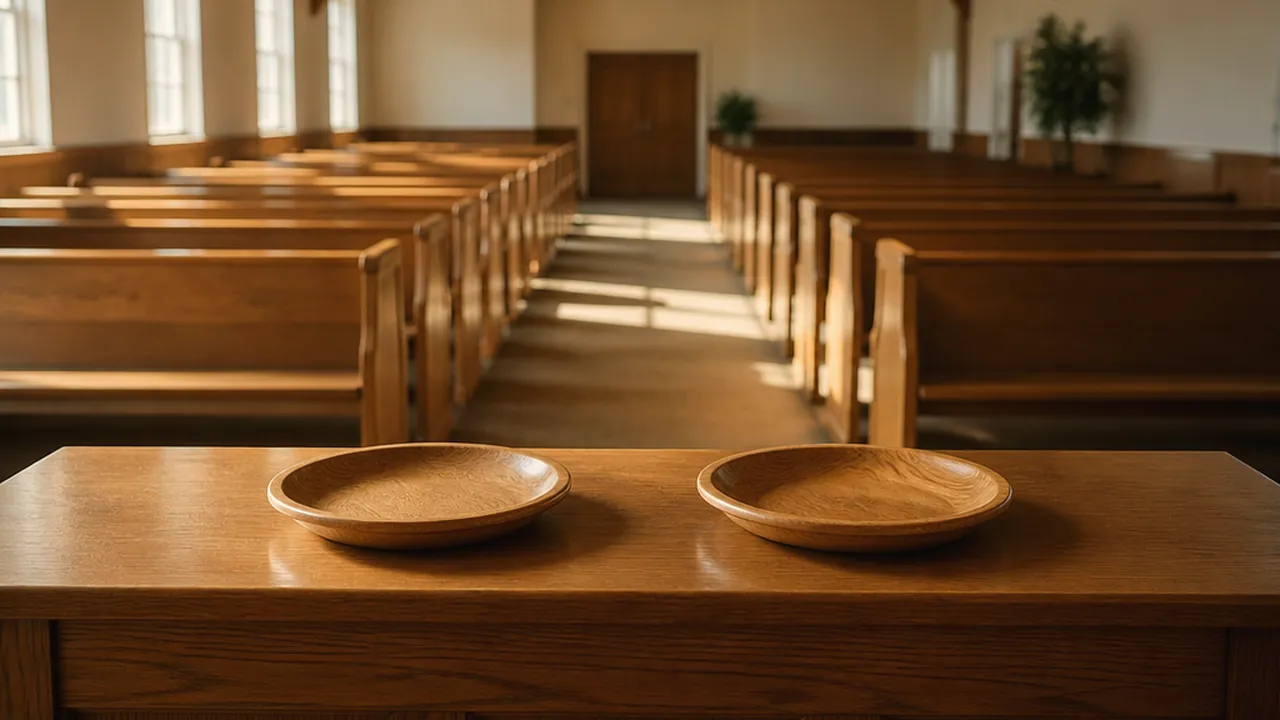
Set out the communion vessels, trays, books and cloths before choosing a new table. Include everything the table will hold during the service, rather than only the arrangement shown in a furniture photograph. The useful purchasing question is whether people can prepare, use and clear that arrangement on the proposed piece.
Have the worship leader define the table's role first. Your congregation's practice should determine the furniture brief. Identify what belongs on the communion table, what is prepared elsewhere and which other platform furnishings will remain.
Name the furniture job
Product names are not a substitute for that discussion. Sauder Worship's chancel and platform brochure lists communion tables, altars and credence stands as separate furniture categories. The brochure is a dated collection reference, not a current offer. It helps identify the type of piece being discussed; it does not decide which one your worship practice requires.
Write a short description in the congregation's own terms: the table's position, the people using it, the items on it and whether it remains in place. If preparations occur on a separate surface, include that piece in the plan. A larger communion table may not solve a shortage of preparation space somewhere else.
If the existing table is still suitable, identify why a new one is needed. A finish preference, a damaged component and a working surface that is too small are different problems. The committee can consider keeping or repairing the existing piece alongside replacing it, without making the purchase decision a judgment about the service itself.
Check the complete surface arrangement
Use the largest arrangement the proposed table is meant to serve. Measure the vessels or trays with their handles, lids and bases. Add the book in its open position, the cloth and any other items the worship team actually uses. Record where hands need to lift or set something down, not just where objects can be packed edge to edge.
Here is an invented fit example. Four square trays, each 16 inches across, need 64 inches of length when placed in one straight row before any gaps. A proposed 60-by-24-inch top cannot hold that row. A two-by-two arrangement occupies 32 by 32 inches before gaps, so it also exceeds that top's depth. Neither arrangement fits that top. Review a different surface or another service arrangement with the worship team before approving the piece.
Use your real items for the final check. Mark the proposed top's usable outline on an existing suitable surface, keeping valuable vessels within secure support. Include any shaped edges or decorative features that reduce usable space. A cardboard outline can compare dimensions, but it cannot establish the new table's strength, stability or finish performance.
Try the work around the table
Ask the people who prepare and use the table to walk through their normal sequence. Where do they stand? From which side do they approach? Can they reach the items they need without moving something that must remain in place? Include the way the cloth hangs and the positions occupied by the base, legs or any modesty panel.
Review the proposed height with the actual users and the work involved. Do not select a height from a generic dining-table recommendation. A supplier should provide the exact dimensions and intended use of the proposed piece; the church should approve how it works in the service.
For a table that moves, specify that requirement before the quote. Ask for the permitted moving method, suitable hardware and where the table will be stored. Do not assume decorative legs, concealed wheels or a removable top are included. Have the facilities team review the route and the proposed location alongside the other platform furniture.
Approve appearance and care together
Take finish samples into the room beside the retained pulpit, chairs and woodwork. Decide whether the aim is a close match or a coordinated difference. Confirm any inscription, symbol or other detail through a drawing that shows its position on the actual piece. Agree who can approve that artwork before the supplier starts it.
Ask for care instructions that address the table's materials and the congregation's actual use. Explain any liquids, coverings or other items that will contact the surface. Use the maker's approved cleaning method; an attractive finish sample does not prove that the church's current cleaning products suit it.
Keep the approved top arrangement, overall dimensions, base details, finish reference, artwork and moving requirements together. Mark unresolved points and the person who will answer each one. The reseating committee guide can help organize church decision authority when a wider furniture project is involved; the table still needs its own specification approval.
You can include this requirement with a Ministry Facilities furniture inquiry, explaining whether the project also includes church chairs or fellowship furniture. Ask first whether the supplier can provide the proposed table or whether it needs a specialist maker. Supply, construction and timing remain unconfirmed until discussed. A coordinated chair order should not quietly be treated as an agreement to produce a piece of platform furniture.