MF / 03.01
Money & Stewardship
Planning a Renovation Fundraise Your Congregation Can Believe In
A committee-friendly guide to planning a church renovation fundraise: readiness, the quiet phase, pledge periods, and keeping trust through reporting.

Somewhere between the moment the trustees admit the roof cannot wait another winter and the Sunday the congregation votes on a campaign, there is a season of planning that determines almost everything that follows. Most churches skip it. They announce a number, print some envelopes, and hope. Then, six months in, the property chair is standing at coffee hour explaining why the thermometer poster in the narthex hasn't moved since Easter.
Renovation fundraising is not only a money problem. It also depends on a credible scope, governance, communication, and time. This guide offers planning questions rather than predicting what any congregation will raise.
This article walks through the pieces of a campaign scaled to congregational life: not the version written for hospitals and universities, but the version that has to survive a congregational meeting, a skeptical treasurer, and the reality that your best volunteers are already running three other ministries.
Are You Actually Ready?
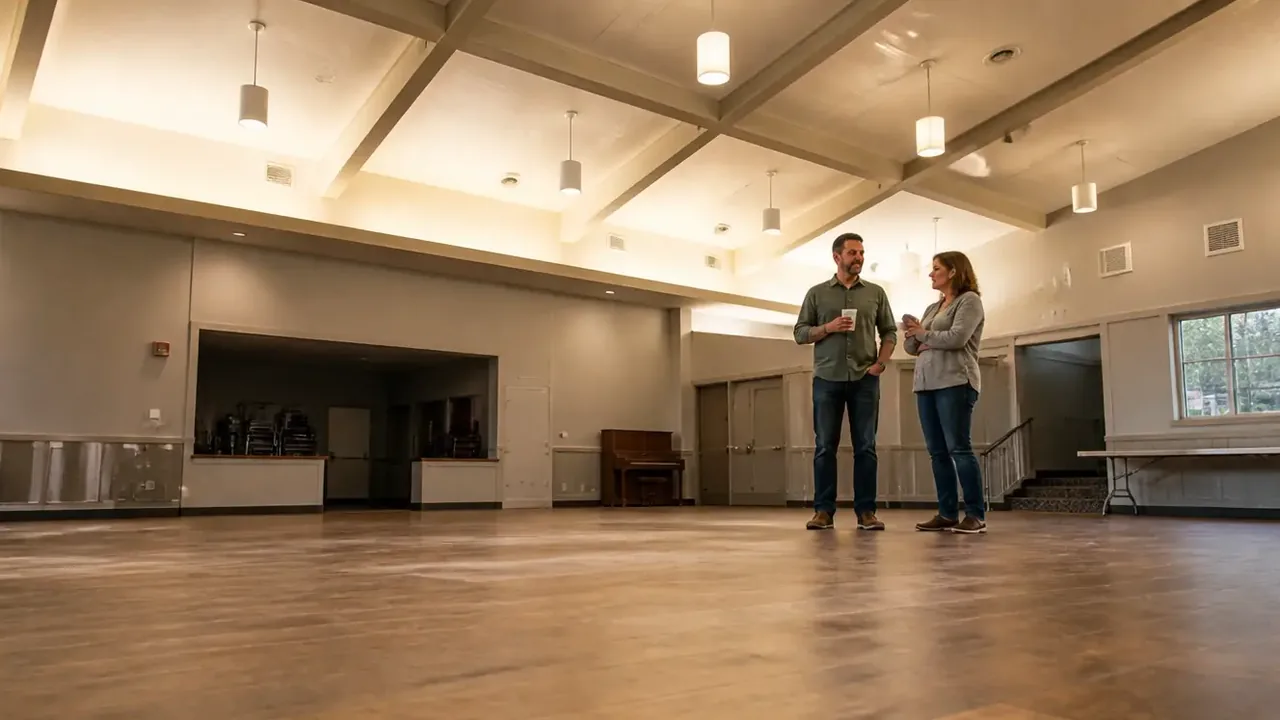
Before anyone talks about goals or brochures, your board (your session, vestry, council, or trustees, whatever your tradition calls it) should honestly assess readiness. Useful readiness questions include:
- The project has been studied, not just discussed. Someone has scoped what actually needs doing, ideally with professional help. If you're still guessing at the size of the work, read our piece on when to bring in an architect before you go further.
- Leadership is unified. If the board is split, the congregation will be more split. Campaigns launched to force consensus rarely find it.
- The operating budget is stable. A campaign layered on top of a deficit reads as desperation, and members quietly wonder whether their capital gift will be quietly absorbed into keeping the lights on.
- Someone credible is willing to chair it. Not necessarily your wealthiest member: your most trusted one.
If several of those are missing, consider waiting and working on them. A delayed campaign may be preferable to launching before the scope, leadership, or operating budget is ready.
People Give to Vision, Not to Drywall

A case statement should explain both the construction scope and the ministry purpose it is meant to serve. A roof project can be connected to a dry youth room; an accessibility project can explain how families will participate together. Those examples illustrate the purpose without hiding the work being purchased.
Your case statement, the one- or two-page document that explains the campaign, should spend most of its words on why and only a paragraph or two on what. Name the ministries the renovation serves. Connect the project to the congregation's story and, in whatever language your tradition uses, its calling. Then state the scope, the timeline, and the goal plainly, because vision without candor is just marketing.
Test the draft on people who were not in the room when it was written. If a longtime member reads it and asks "but why now?", it isn't done.
The Quiet Phase: Leadership Gives First

Well-run campaigns of every size share one structural feature: leadership gifts are secured quietly before anything is announced publicly. This is not elitism; it is stewardship of momentum. When the campaign launches with a meaningful portion of the goal already pledged by the board, the building committee, and a handful of committed families, the congregation sees that the people asking have already answered. When it launches at zero, every member privately waits for someone else to move first.
Practically, the quiet phase means the campaign chair and the pastor (or whoever your polity assigns) sit down personally with leaders and likely lead donors, share the case, and ask directly. These conversations should never be delegated to a letter. Depending on your tradition's customs around money, this can feel uncomfortable. Do it anyway, gently. The discomfort of a personal ask is far smaller than the discomfort of a public stall.
Pledges Over Years, Not Checks Overnight
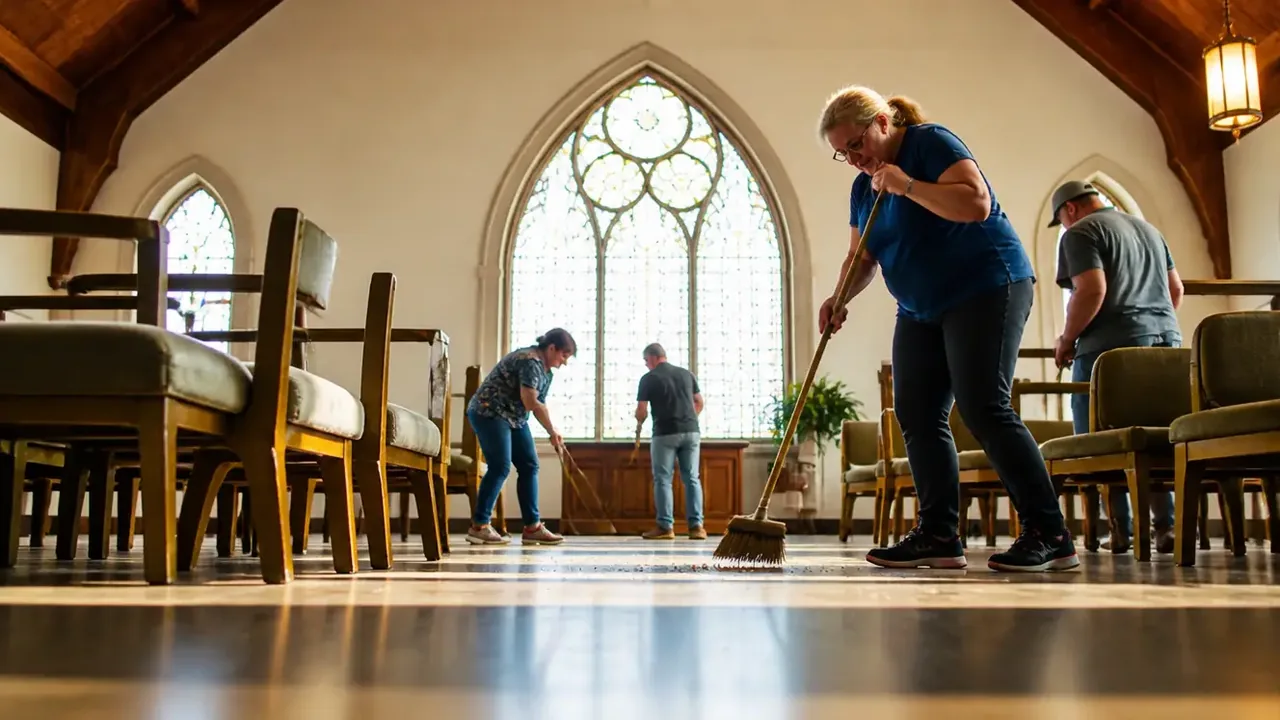
Congregational generosity lives in ordinary budgets, and ordinary budgets breathe over time. If the congregation accepts pledges, choose a period that fits its governance, donor capacity, project cash flow, and financing plan rather than importing a standard three- or five-year term. Suppose, purely as an invented example, your goal is $200,000: a household might choose a monthly commitment, but the board should model pledge fulfillment conservatively and distinguish pledges from cash received.
Multi-year pledging also disciplines the project side. Your treasurer can model cash flow, your board can decide honestly whether construction starts on pledges or waits on cash, and, this matters, you can talk with your regional body about bridge financing. Many denominations operate loan or extension funds designed exactly for this moment; ask your regional office what exists in your tradition before you walk into a commercial bank.
Memorial Gifts, Honor Gifts, and Restrictions

Renovations attract gifts given in memory of a parent or in honor of a beloved former pastor, and these can be some of the most tender giving your church ever receives. Welcome them, and think ahead about two things.
First, recognition. Decide early, as a board, how memorial and honor gifts will be acknowledged, and apply the policy evenly. A plaque conversation handled inconsistently can wound families for years.
Second, restrictions. Whether a gift is legally or accounting-restricted depends on the solicitation, donor communication, governing documents, and applicable law; neither a project label nor the word "campaign" resolves that question by itself. This is a conversation for your treasurer and a qualified professional, not something to improvise. Adopt a gift-acceptance policy before the campaign opens: what you will accept, what you will decline, and who decides. Charitable-receipt rules also differ between the United States and Canada; consult the IRS guidance on written acknowledgments and the CRA guidance on what counts as a gift, as applicable.
Protecting the Operating Budget
The fear every treasurer carries into a campaign is donor fatigue: that capital giving will cannibalize the weekly offering. It is a legitimate fear, and the answer is not to whisper about the campaign but to be explicit about the relationship between the two. Say from the pulpit and in print: the campaign is over and above, not instead of. Ask members to make their capital pledge as a separate, additional commitment. Report the operating budget and the campaign separately all the way through, so nobody has to guess which envelope fed which fund.
Timing helps too. Avoid launching the public phase in the same season as your annual stewardship drive if you can, and give the congregation a clear end date. Open-ended asks exhaust people; defined seasons of sacrifice inspire them.
Celebrate Milestones, Report Relentlessly
Transparency is the fuel of a long campaign. Set a rhythm (monthly in the bulletin or newsletter, quarterly at greater length) and report pledges, cash received, and project status, including the boring parts and the setbacks. Congregations forgive delays they were told about; they do not forgive surprises.
And celebrate. When pledges cross the halfway mark, mark it in worship in whatever way fits your tradition. When the quiet phase closes, thank those leaders publicly (with their permission). When demolition starts, invite the children to sign a wall stud. These moments cost nothing and keep the campaign woven into the congregation's shared life rather than running alongside it.
When the Campaign Stalls
Most campaigns stall somewhere past the middle, when the early enthusiasts have pledged and the undecided are still deciding. Do not panic, and do not simply repeat the launch louder. Diagnose. Is it a communication gap: people assume it's already funded? A trust gap: questions about the plan nobody has answered publicly? A participation gap: many households never personally asked?
The remedy is almost always personal contact: a second wave of one-on-one visits, a town-hall evening where the architect or builder answers hard questions, a testimony in worship from an ordinary family about why they pledged. If the gap is genuinely financial, your board may need to phase the project (do the roof now, the hall next), which is far better received than quietly lowering the goal.
After the Last Pledge
When the campaign ends, thank everyone, in writing, specifically. Then fold what you have learned into ordinary life: the discipline of reporting, the habit of connecting money to mission, and, crucially, a plan for keeping the renovated building renovated. A congregation that funds a new roof and no maintenance reserve will be back here in twenty years; our guide to maintenance as stewardship is the natural next chapter.
And if your renovation touches the sanctuary itself (seating, layout, accessibility), the fundraising committee and the design committee need to be talking from day one. Our walkthrough on running a reseating committee covers how those conversations go well, and how they go badly.
A renovation campaign, done faithfully, leaves a congregation with more than a building. It leaves a story the church tells for a generation: the year we decided this place mattered enough to sacrifice for. Plan for the money, certainly. But build for the story.